Advanced Practice Provider (APP) Family Medicine Fellowship Program
Fellowship Program Overview
This one-year fellowship combines broad clinical experience, structured education, and a capstone project to support fellows’ continued professional development in Family and Community Medicine (FCM).
Clinical Experience
Fellows will complete 11 rotations across the following clinical specialties: Acute Care, Sports Medicine, Pulmonary, Gastroenterology, Neurology, Gynecology, Dermatology, Cardiology, Endocrinology, Pediatrics, and Psychiatry. Throughout the year, fellows will also provide care in FCM clinics, both during and between specialty rotations.
Education and Scholarship
Fellows will participate alongside residents in a Wednesday afternoon lecture series, complemented by ongoing informal teaching with clinical preceptors. Each fellow will complete a capstone project by the end of the fellowship and present their work at APP Grand Rounds.
Anticipated Start Date
The inaugural fellowship is anticipated to begin in January 2027. Future fellowships are expected to begin annually in October.
Learning Objectives
1. Patient Care
Upon completion of the fellowship, the APP fellow will be able to:
- Deliver comprehensive, evidence-based primary care across the lifespan, including pediatric, adult, geriatric, and women's health populations.
- Perform accurate histories, physical examinations, diagnostic evaluations, and treatment planning for acute and chronic conditions.
- Manage common outpatient conditions using current clinical guidelines and best practices.
- Develop and implement individualized care plans that integrate preventive, acute, and chronic disease management.
- Perform office-based procedures safely and competently, including:
- Joint injections
- Skin biopsies
- Cryotherapy
- Incision and drainage
- Toenail procedures
- Suturing and wound management
- IUD and Nexplanon placement
- Demonstrate proficiency in telehealth assessment and management.
1. Patient Care
Upon completion of the fellowship, the APP fellow will be able to:
- Deliver comprehensive, evidence-based primary care across the lifespan, including pediatric, adult, geriatric, and women's health populations.
- Perform accurate histories, physical examinations, diagnostic evaluations, and treatment planning for acute and chronic conditions.
- Manage common outpatient conditions using current clinical guidelines and best practices.
- Develop and implement individualized care plans that integrate preventive, acute, and chronic disease management.
- Perform office-based procedures safely and competently, including:
- Joint injections
- Skin biopsies
- Cryotherapy
- Incision and drainage
- Toenail procedures
- Suturing and wound management
- IUD and Nexplanon placement
- Demonstrate proficiency in telehealth assessment and management.
2. Medical Knowledge
Upon completion of the fellowship, the APP fellow will be able to:
- Apply advanced knowledge of pathophysiology, pharmacology, and diagnostic reasoning to primary care practice.
- Utilize evidence-based guidelines for management of:
- Cardiology - A fib, heart failure, chest pain work-up, hypertension, hyperlipidemia
- Endocrinology: Diabetes and thyroid disorders
- Obesity
- Psychiatry- Depression and anxiety; Bipolar disorder, insomnia, addiction, ADHD
- Asthma and COPD
- Common musculoskeletal conditions (sports medicine)
- Common dermatology identification and management
- Gastroenterology- Abdominal pain, MASLD, IBS, GERD
- Pediatric and Adolescent
- Acute Care
- Neurology- headache management
- Women’s Health- Contraception management, Pap tests, AUB, IUD, Nexplanon
- Interpret laboratory, imaging, and other diagnostic studies appropriately.
- Recognize conditions requiring urgent intervention, specialist referral, or higher levels of care.
- Incorporate social determinants of health into clinical decision-making.
2. Medical Knowledge
Upon completion of the fellowship, the APP fellow will be able to:
- Apply advanced knowledge of pathophysiology, pharmacology, and diagnostic reasoning to primary care practice.
- Utilize evidence-based guidelines for management of:
- Cardiology - A fib, heart failure, chest pain work-up, hypertension, hyperlipidemia
- Endocrinology: Diabetes and thyroid disorders
- Obesity
- Psychiatry- Depression and anxiety; Bipolar disorder, insomnia, addiction, ADHD
- Asthma and COPD
- Common musculoskeletal conditions (sports medicine)
- Common dermatology identification and management
- Gastroenterology- Abdominal pain, MASLD, IBS, GERD
- Pediatric and Adolescent
- Acute Care
- Neurology- headache management
- Women’s Health- Contraception management, Pap tests, AUB, IUD, Nexplanon
- Interpret laboratory, imaging, and other diagnostic studies appropriately.
- Recognize conditions requiring urgent intervention, specialist referral, or higher levels of care.
- Incorporate social determinants of health into clinical decision-making.
3. Preventive Medicine and Population Health
Upon completion of the fellowship, the APP fellow will be able to:
- Implement age-appropriate screening recommendations.
- Counsel patients regarding lifestyle modification, nutrition, exercise, tobacco cessation, and substance use prevention.
- Develop vaccination plans according to current recommendations.
- Apply population health principles to identify care gaps and improve preventive care outcomes.
- Utilize panel management strategies to improve chronic disease metrics and quality indicators.
3. Preventive Medicine and Population Health
Upon completion of the fellowship, the APP fellow will be able to:
- Implement age-appropriate screening recommendations.
- Counsel patients regarding lifestyle modification, nutrition, exercise, tobacco cessation, and substance use prevention.
- Develop vaccination plans according to current recommendations.
- Apply population health principles to identify care gaps and improve preventive care outcomes.
- Utilize panel management strategies to improve chronic disease metrics and quality indicators.
4. Clinical Decision-Making and Diagnostic Reasoning
Upon completion of the fellowship, the APP fellow will be able to:
- Develop comprehensive differential diagnoses for common and complex clinical presentations.
- Demonstrate clinical reasoning that balances evidence, patient preferences, and resource stewardship.
- Recognize diagnostic uncertainty and appropriately seek consultation when necessary.
- Integrate risk stratification tools into patient management.
Safely manage patients with multiple comorbidities and polypharmacy
4. Clinical Decision-Making and Diagnostic Reasoning
Upon completion of the fellowship, the APP fellow will be able to:
- Develop comprehensive differential diagnoses for common and complex clinical presentations.
- Demonstrate clinical reasoning that balances evidence, patient preferences, and resource stewardship.
- Recognize diagnostic uncertainty and appropriately seek consultation when necessary.
- Integrate risk stratification tools into patient management.
Safely manage patients with multiple comorbidities and polypharmacy
5. Interprofessional Collaboration
Upon completion of the fellowship, the APP fellow will be able to:
- Function effectively within a multidisciplinary primary care team.
- Collaborate with physicians, pharmacists, behavioral health professionals, nurses, care managers, and specialists.
- Coordinate transitions of care between outpatient, inpatient, emergency department, and specialty settings.
- Utilize team-based care approaches for patients with complex medical and psychosocial needs.
5. Interprofessional Collaboration
Upon completion of the fellowship, the APP fellow will be able to:
- Function effectively within a multidisciplinary primary care team.
- Collaborate with physicians, pharmacists, behavioral health professionals, nurses, care managers, and specialists.
- Coordinate transitions of care between outpatient, inpatient, emergency department, and specialty settings.
- Utilize team-based care approaches for patients with complex medical and psychosocial needs.
6. Communication Skills
Upon completion of the fellowship, the APP fellow will be able to:
- Establish therapeutic relationships with patients and families from diverse backgrounds.
- Demonstrate effective motivational interviewing techniques.
- Deliver difficult news using patient-centered communication strategies.
- Promote shared decision-making and informed consent.
- Document patient encounters accurately, efficiently, and in compliance with regulatory requirements.
6. Communication Skills
Upon completion of the fellowship, the APP fellow will be able to:
- Establish therapeutic relationships with patients and families from diverse backgrounds.
- Demonstrate effective motivational interviewing techniques.
- Deliver difficult news using patient-centered communication strategies.
- Promote shared decision-making and informed consent.
- Document patient encounters accurately, efficiently, and in compliance with regulatory requirements.
7. Practice-Based Learning and Improvement
Upon completion of the fellowship, the APP fellow will be able to:
- Evaluate personal performance through chart review, outcome analysis, and feedback.
- Develop individualized learning plans based on self-assessment.
- Critically appraise medical literature and apply findings to clinical practice.
- Participate in quality improvement initiatives.
- Utilize clinical data to improve patient outcomes and practice efficiency.
7. Practice-Based Learning and Improvement
Upon completion of the fellowship, the APP fellow will be able to:
- Evaluate personal performance through chart review, outcome analysis, and feedback.
- Develop individualized learning plans based on self-assessment.
- Critically appraise medical literature and apply findings to clinical practice.
- Participate in quality improvement initiatives.
- Utilize clinical data to improve patient outcomes and practice efficiency.
8. Systems-Based Practice
Upon completion of the fellowship, the APP fellow will be able to:
- Navigate healthcare systems effectively to optimize patient access and outcomes.
- Demonstrate knowledge of value-based care principles.
- Incorporate cost-conscious care into clinical decision-making.
- Address barriers related to health disparities and social determinants of health.
- Utilize community resources to improve patient care and support.
8. Systems-Based Practice
Upon completion of the fellowship, the APP fellow will be able to:
- Navigate healthcare systems effectively to optimize patient access and outcomes.
- Demonstrate knowledge of value-based care principles.
- Incorporate cost-conscious care into clinical decision-making.
- Address barriers related to health disparities and social determinants of health.
- Utilize community resources to improve patient care and support.
9. Professionalism and Leadership
Upon completion of the fellowship, the APP fellow will be able to:
- Demonstrate accountability, integrity, and ethical decision-making.
- Incorporate principles of diversity, equity, inclusion, and cultural humility into patient care.
- Manage workload and maintain personal well-being to prevent burnout.
- Serve as a role model for professional behavior within the healthcare team.
- Demonstrate leadership skills in clinical practice, quality improvement, and team-based care.
9. Professionalism and Leadership
Upon completion of the fellowship, the APP fellow will be able to:
- Demonstrate accountability, integrity, and ethical decision-making.
- Incorporate principles of diversity, equity, inclusion, and cultural humility into patient care.
- Manage workload and maintain personal well-being to prevent burnout.
- Serve as a role model for professional behavior within the healthcare team.
- Demonstrate leadership skills in clinical practice, quality improvement, and team-based care.
10. Scholarly Activity and Quality Improvement (Capstone project)
Upon completion of the fellowship, the APP fellow will be able to:
- Design and complete quality improvement or evidence-based practice project.
- Analyze clinical outcomes using appropriate quality metrics.
- Present project results to institutional or professional audiences.
- Utilize implementation science principles to improve clinical processes.
- Foster a culture of continuous improvement within primary care practice.
10. Scholarly Activity and Quality Improvement (Capstone project)
Upon completion of the fellowship, the APP fellow will be able to:
- Design and complete quality improvement or evidence-based practice project.
- Analyze clinical outcomes using appropriate quality metrics.
- Present project results to institutional or professional audiences.
- Utilize implementation science principles to improve clinical processes.
- Foster a culture of continuous improvement within primary care practice.
Fellowship Completion Competencies
Graduates will demonstrate readiness to:
- Independently manage a primary care patient panel.
- Care for patients across the lifespan.
- Serve as a high-functioning member of the primary care team.
- Deliver evidence-based, patient-centered family medicine care.
- Lead quality improvement and population health initiatives.
- Transition successfully into autonomous APP family medicine practice.
Employment
Please visit UK Jobs for other employment opportunities.
Contact Us
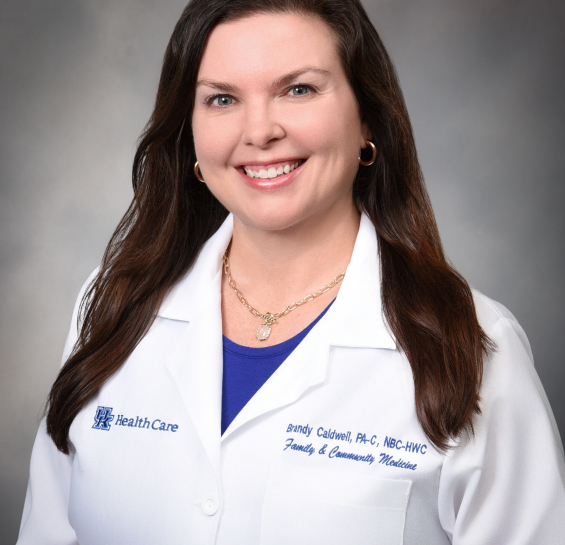
Brandy Caldwell
- APP Family and Community Medicine Fellowship Coordinator/ Physician Assistant