
Research
About Research in Family and Community Medicine
The division of research is part of the department of family and community medicine at the University of Kentucky College of Medicine. We engage in a robust portfolio of scholarly activities including education and clinical, behavioral, and practice-based research. Research and educational programs have been supported through funding from the Health Research and Services Administration (HRSA), National Institutes of Health (NIH), Centers for Disease Control and Prevention (CDC), and private foundations.
The department is also home to the Kentucky Ambulatory Network (KAN), a practice-based research network founded in 2000. KAN has completed several studies and continues to collaborate with organizations within Kentucky and across state lines.
Our research is engaged with collaborators spanning various fields, including public health, health information technology, and basic sciences. We partner with our communities to assist in bringing solutions to issues that need to be resolved within the communities. Community engagement is an important approach to much of the work we do in collaboration with community-based organizations.
We appreciate and look forward to opportunities to work with our colleagues and communities.
Students who are interested in engaging in research with our faculty can email a filled out interest form directly to the faculty member of interest.
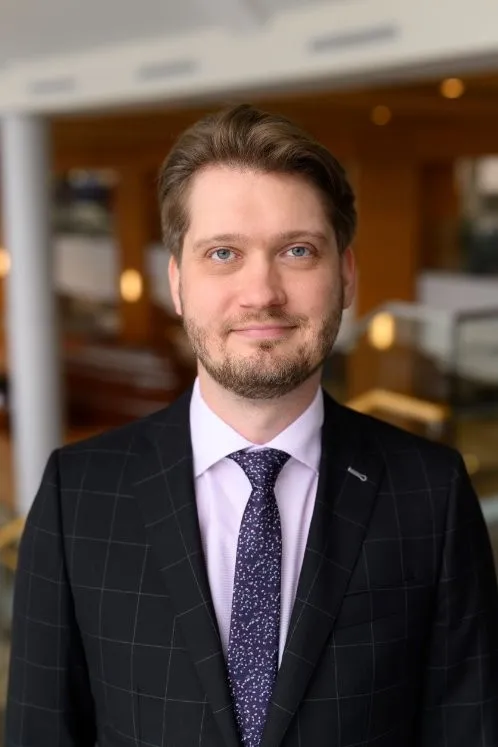
Vice Chair for Research
Dr. Koffarnus is director of the Healthier Futures Lab and an associate professor and vice chair for research in the department of family and community medicine. He received his BA degree in psychology from the University of Wisconsin – Eau Claire and completed both his MS and PhD degrees in biopsychology from the University of Michigan. Dr. Koffarnus also completed an internship and pre-doctoral fellowship at the National Institute on Drug Abuse before completing his post-doctoral fellowship in the Behavioral Pharmacology Research Unit at Johns Hopkins University.
Dr. Koffarnus is a leading expert on environmental factors that contribute to alcohol and tobacco use, specifically the use of contingency management for decreasing substance use. Dr. Koffarnus is a fellow of the American Psychological Association and currently serves on the editorial board for the Journal of the Experimental Analysis of Behavior, Experimental and Clinical Psychopharmacology, and Psychology of Addictive Behaviors.
Click here to view his full publication list.
Meet our Research Faculty
Dr. Bethany Shorey Fennell
Bethany Shorey Fennell, PhD is an assistant professor of family and community medicine at the University of Kentucky and a member of Markey Cancer Center’s Cancer Prevention and Control Program and the Appalachian Tobacco Regulatory Science Team (AppalTRUST) at UK. She holds a PhD in Experimental Psychology from Washington State University and completed a postdoctoral fellowship in Behavioral Oncology at Moffitt Cancer Center in Tampa, FL. Dr. Fennell’s research focuses on substance use and cancer prevention, with a particular emphasis on using health communication techniques to improve outcomes related to tobacco cessation, cannabis and tobacco co-use, and tobacco regulatory science (TRS). Dr. Fennell has been the recipient of NIH-funded fellowships and grants. She is currently leading an NCI-funded R03 to develop anti-smoking messaging for adults smoking nondaily, an online national data collection to characterize cannabis and tobacco co-use, and a study to assess cannabis use in Kentucky as the legal medical market opens.
Interests: Cancer prevention, smoking cessation, cannabis use, co-use, tobacco regulatory science, health communication
Dr. Lars Peterson
Lars Peterson, MD, PhD is a family physician and health services researcher and senior physician scientist at the American Board of Family Medicine (ABFM) and a professor of family and community medicine at the University of Kentucky. He is leading team research efforts at the ABFM to understand what family physicians do in practice and how the quality of care they provide can be improved. In particular, elucidating the ways in Continuing Certification participation may be associated with quality of care. His research interests include investigating associations between area level measures of health care and socioeconomics with both health and access to health care, rural health, primary care, and comprehensiveness of primary care.
Interests: Family Medicine certification, residency training and outcomes, primary care, rural health
Dr. Mary Sheppard
Mary Burchett Sheppard, MD, is an assistant professor and co-associate director of the Saha Aortic Center at the University of Kentucky. She graduated from the University of Kentucky College of Medicine, where she was inducted into Alpha Omega Alpha. She then completed a residency in Family Medicine at the University of Virginia, where she also received a certificate in Global Health. Dr. Sheppard is currently working on a doctoral dissertation in Clinical and Translational Science.
Dr. Sheppard’s research focuses on improving the lives of people with Marfan syndrome and related conditions. Current projects include identifying novel therapies to attenuate aortic growth in Marfan syndrome: she recently received a patent for the use of antisense oligonucleotides targeting angiotensinogen to attenuate aortic pathology in Marfan syndrome (US Patent #11,649,458). She is also working to understand the mechanism by which angiotensin receptor blockers and statin medications improve aortic disease in mice with Marfan syndrome. Dr. Sheppard also participates in multiple clinical and translational projects, such as evaluating the development of hip and knee osteoarthrtitis in people with Marfan syndrome. She is a member of the Montalcino Aortic Consortium and participates in CLARITY aortic database. She currently serves as Vice Chair on the Patients, Families, and Clinicians Education and Communication Working Group for the Genetic Aortic Network.
Interests: Marfan syndrome, Aortic aneurysm/dissection
Dr. Karen Roper
Karen Roper, PhD, is an assistant professor whose research focuses on understanding foundational attitudes and health behaviors across several topics of critical importance to primary care and prevention, most recently opioid treatment, diabetes prevention, and reproductive healthcare. Using mixed-methods approaches, I have sought to insert the patient and provider "voice" into evidence-based strategies that can improve clinical care and practice-based strategies. For example, recently funded work seeks to characterize and identify barriers – using chart review, patient and provider survey, and interview – to provide comprehensive postpartum care for women with a history of Gestational Diabetes Mellitus.
She serves as director of a primary care practice-based research network (PBRN), the Kentucky Ambulatory Network (KAN). KAN helps to connect the state’s primary care physicians, scientists, and public health experts with research opportunities in their community practice settings. I also founded and direct the Addiction Specialists of Kentucky Council (ASK), made up of health service professionals on the front lines of care for persons who use drugs. Research groups meet with the ASK to vet their ideas to produce more meaningful, applicable projects that directly benefit human health.
She also serves on the Committee on Advancing the Science of Family Medicine (CASFM) of the N. American Primary Care Research Group and am the Research and Education Committee Chair of the multi-state Appalachian Translational Research Network, supporting collaborative research focused on Appalachian Health at ATRN institutions, communities, and beyond.
Interests: Mixed methods research, diabetes prevention, reproductive healthcare, buprenorphine prescribing, project evaluation
Dr. Mark Rzeszutek
Mark J. Rzeszutek, PhD., BCBA-D, is an assistant professor in the UK College of Medicine Department of Family and Community Medicine. He completed a BA in Comprehensive Psychology from Wilfred Laurier University, an MS in Applied Behavior Analysis from St. Cloud State University, and a PhD in Psychology from Western Michigan University. He has received funding from the National Institute of Alcohol Abuse and Alcoholism along with the American Foundation for Suicide Prevention to study how alcohol use and alcohol use treatment affect suicidal thoughts and behaviors using a contextualized reinforcer pathology framework. His current research primarily focuses on methodologies in the quantitative analysis of behavior, using behavioral economics to better understand the relationship between alcohol use and suicidal thoughts and behaviors, and understanding the effects of exposure to suicide and overdose deaths on substance use and suicide risk.
Interests: Suicidal Thoughts and Behaviors, Behavioral Economic Decision-Making, Alcohol and Polysubstance Use
Dr. William Middleton
Dr. William Middleton, PhD is a current postdoctoral scholar who works primarily on behavioral economics in the context of public health. Dr. Middleton obtained his Bachelors from Arizona State University and his Master's and PhD from University of Vermont. His prior experiences include research on exercise, mood disorders, cardiovascular disease and rehabilitation, and tobacco dual use. Currently, he is developing predictive models of nicotine product substitution away from cigarettes within a harm-reduction framework.
Interests: adaptive treatment strategies, such as SMART designs, and improving behavioral economic models to account for problems of zero, span, and negative demand.