
REC TRAINING
Program Details
REC Scholars at Sanders-Brown
The REC Scholars Training Program supports junior investigators pursuing innovative research in Alzheimer’s disease (AD) and related dementias. Supported by the University of Kentucky’s Alzheimer’s Disease Research Center (ADRC) through an NIH grant, the program provides protected research time, funding, and dedicated mentorship to help emerging investigators build their research programs and advance their careers
Award
Successful applicants will receive $30,000 per year in award funding, generally provided as salary support to establish protected time for research. Of this amount, up to $10,000 per year may be used instead for research supplies to conduct pilot studies. Scholars will also receive an additional $10,000 per year in support for travel to workshops, experiential learning exchanges, and semi-annual national Alzheimer’s Disease Research Center (ADRC) meetings.
Awards provide funding to test novel hypotheses, generate preliminary data, and establish proof of concept—laying the groundwork for expanded research programs and competitive national-level funding.
Eligibility
Employment Status
The REC Scholars program is open to junior faculty and clinical fellows with a primary appointment at the University of Kentucky.
Postdoctoral scholars and fellows are not eligible to apply.
US Status
REC support is intended primarily for US citizens and permanent residents, unless there is strong justification otherwise based on exceptional relevance to the National Institutes of Health (NIH) and the National Institute on Aging (NIA).
Grant Status
A scholar may not apply if they already hold a major independent research grant, such as an NIH R01, as a Principal or Multiple Principal Investigator when entering the REC Scholar program.
Requirements
Documents
Applicants will need to upload a single PDF that includes a (1) cover page, (2) research plan, (3) career goals summary, (4) biographical sketch, (5) budget and budget justification, and (6) optional letters of support.
Next RFA
The application period is currently closed but will reopen in early 2028. Submissions are only accepted through a designated link during the application period.
Start Date
The anticipated start date for this position is July 1 of the year in which the RFA is issued. Applicants selected for the program are typically notified 30-60 days before the start date.
What documents are required to apply?
You will need to upload a single PDF that includes the following items:
- Cover Page (one page): Use the template provided in the Application Checklist and Request for Application (RFA) to list the proposal title and contact information.
- Research Plan (up to three pages): The proposed plan should include:
- Specific Aims
- Background & Significance
- Preliminary Work (if available)
- Experimental Design
- Figures & Literature Cited (optional): Up to three additional pages. The ideal project will be focused on obtaining preliminary data to support a future submission for extramural research funding.
- Career Goals Summary (one page): Describe how the research project relates to the applicant’s career goals and to advancing the field of translation AD research.
- Biographical Sketch: Follow standard NIH (old version) or SciENcv formatting requirements.
- Budget and Budget Justification (up to two pages total): Use the template provided in the Application Checklist and Request for Application (RFA) to list details of your budget.
- Letters of Support (optional): If applicable, please provide no more than two letters of support, with no more than two pages for each letter.
What needs to be included in the research plan?
The research plan may be up to three pages and should include:
- Specific Aims
- Background & Significance
- Preliminary Work (if available)
- Experimental Design
- Figures & Literature Cited (optional): Up to three additional pages. The ideal project will be focused on obtaining preliminary data to support a future submission for extramural research funding.
What are the formatting requirements for the proposal?
Formatting for your application should follow these specifications:
- Cover Page (one page): Use the template provided in the Application Checklist and Request for Application (RFA).
- Research Plan (up to three pages): Single-line spacing, no less than 11-point Arial font and ½” margins.
- Career Goals Summary (one page): Single-line spacing, no less than 11-point Arial font and ½” margins.
- Biographical Sketch: Follow standard NIH (old version) or SciENcv formatting.
- Budget with Budget Justification (up to two pages): Use the template provided in the Application Checklist and Request for Application (RFA).
- Letters of Support (up to two pages): Formatting is open.
Before You Submit
For questions specifically related to your proposal and how best to strengthen your research plan, we encourage applicants to leverage the services and resources of the Alzheimer’s Disease Research Center's six cores:
Clinical Core
Neuropathology Core
Data Management & Statistics Core
Outreach, Recruitment & Engagement Core
Biomarker Core
Research Education Component Core
Application Review
REC Scholars can come from nearly any health-related scientific discipline. Because research on Alzheimer’s disease and related dementias (ADRD) depends on cross-disciplinary collaboration, applicants from diverse academic and research backgrounds are encouraged to apply.
We look for research proposals focused on basic, clinical, or translational research, with particular interest in risk factors and prevention, preclinical Alzheimer’s disease (AD), therapeutics, caregiving, medically underserved populations, biomarkers, and neuroimaging.
Applications will be reviewed by the REC Steering Committee and external faculty reviewers (if needed) with expertise in the fields covered in the applications. Summaries of the reviews will be provided to the applicant.

REC Scholar provided invaluable mentorship and access to an interdisciplinary network, advancing my work in music-based interventions for persons with dementia, and supported my progression to the IMPACT-AD program.
Required Training Activities
Applicants accepted into the program will follow a customized training plan to advance their career development goals with mentored support. Training will be provided in a supportive and collaborative academic environment with experienced and dedicated training faculty.
Develop a Personalized Mentoring Committee
Work with the REC Steering Committee to establish a mentoring committee that includes mentor(s) aligned with the scholar’s research and career goals.
Create an Individualized Development Plan (IDP)
Develop an IDP that outlines career goals, objectives, and milestones and provides a framework for tracking progress throughout the appointment.
Participate in Educational and Career Development Activities
Engage in the AD101 curriculum, experiential learning, and other educational and professional development activities offered through the program.
Attend ADRC Meetings and Campus Events
Participate in the semi-annual national Alzheimer’s Disease Research Center (ADRC) meetings and the annual campus Markesbery Symposium.
Prepare Annual Progress Report
Submit an annual progress report documenting research activities, accomplishments, career development, and progress toward established goals.
Acknowledge Program Support
Cite support from the ADRC REC Scholars Program (NIH P30 AG072946) in presentations and publications resulting from work supported through the program.
Leadership

Dan Lee, PhD
- Leader, REC Scholar Program
- Professor, Department of Neuroscience
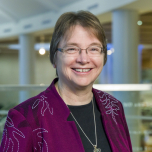
Linda Van Eldik, PhD
- Associate Leader, REC Scholar Program
- Director of the Sanders-Brown Center on Aging
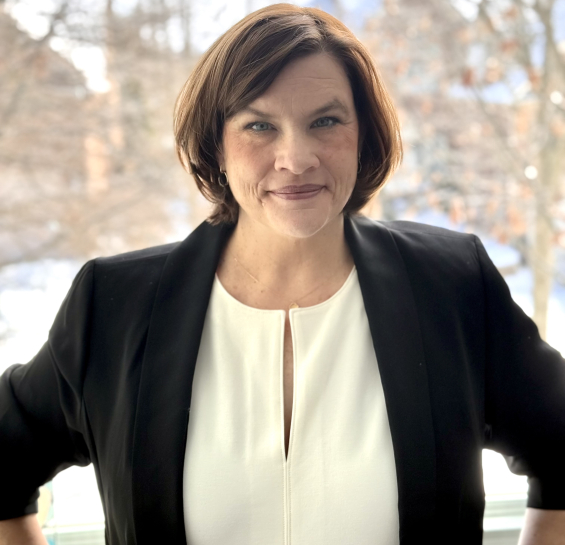
Shannon Macauley, PhD
- Associate Leader, REC Scholar Program
- Associate Professor, Department of Physiology

Learn More


Connect With Us
Email Us
Reach out to Sanders-Brown Training with questions about the REC Scholars program, and a team member will be in touch.
Contact Leadership
Feel free to contact REC leadership directly: Dan Lee, PhD; Linda Van Eldik, PhD; and Shannon Macauley, PhD.