TRIAD Training
Program Details
About TRIAD
Located at the University of Kentucky's Sanders-Brown Center on Aging, the TRIAD program supports predoctoral and postdoctoral scholars through funded, mentored research training over a one to two-year period. Trainees are salaried according to NIH standards, receive benefits, have access to specialized research resources, and receive guidance from experienced faculty mentors while participating in structured career and professional development activities.
PROFESSIONAL DEVELOPMENT
Collaborate with cross-disciplinary teams to strengthen your research.
With over 30 faculty mentors, our program offers a wide range of research and interdisciplinary expertise, as well as exposure to diverse methodologies.
Access next-level resources and technologies to support your science.
Work within our core AD complex to access advanced imaging facilities, molecular biology and genomics tools, biostatistics and bioinformatics support, and a biobank of human specimens for clinical work.
Learn how your science can impact Alzheimer's disease research.
TRIAD is a training program focused on risk factors for Alzheimer's Disease (AD). Apply to discuss your science with our program directors and explore how it could contribute to AD research.
MENTORSHIPS
Building Supportive Mentor-Trainee Matches
Strong mentor-trainee matches are the foundation of successful research training. Through a thoughtful, permissions-based process, TRIAD pairs trainees with mentors whose expertise, mentoring style, and professional networks align with the trainee’s research interests and career goals.
If you’re currently working with a mentor who is unaffiliated with the Sanders-Brown Center on Aging, there are mechanisms for appointing a secondary mentor from our program without requiring a trainee to change labs.
For scholars seeking a mentor, we recommend submitting your cover letter and resume, CV, or biosketch through our Request a Mentor form. If your information looks promising, we will reach out to help match you with a mentor.
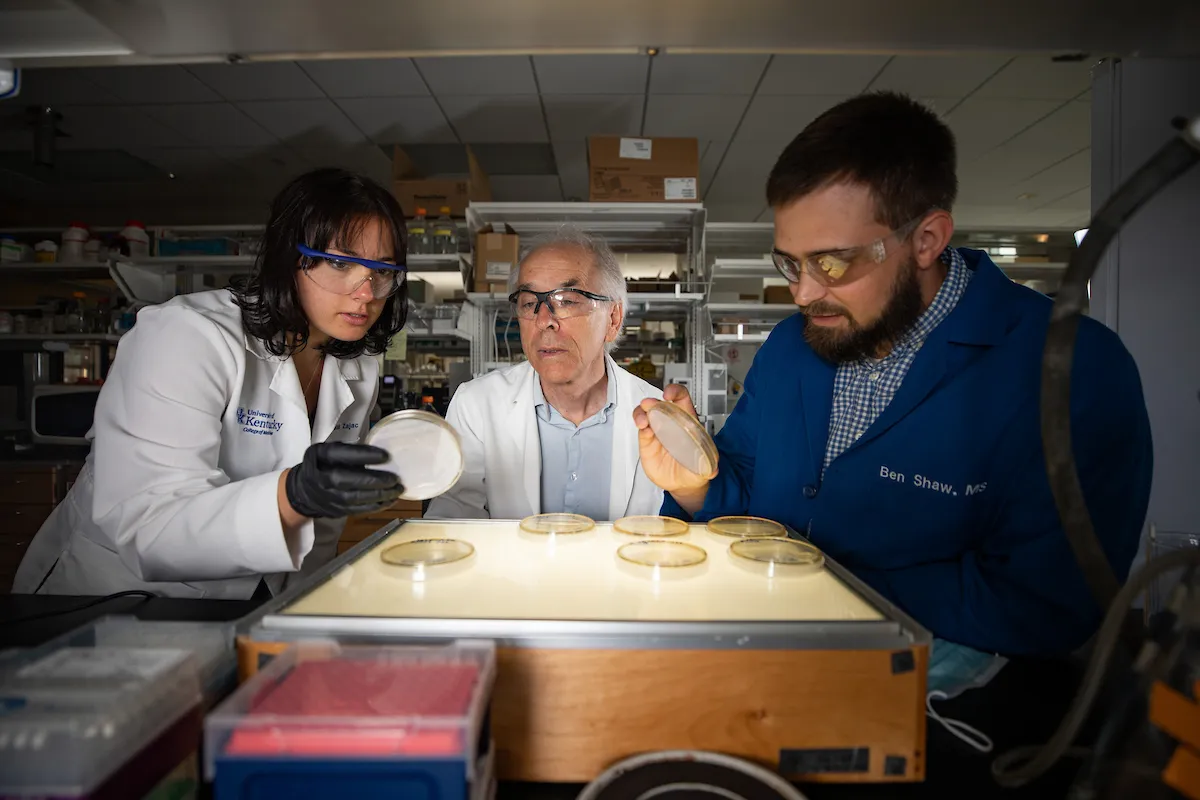
Seeking a mentor?
Submit your cover letter and resume for us to review. If your information looks promising, we will contact you to assist in finding a mentor.
Eligibility
Predoc
Predoctoral trainees who have successfully completed their qualifying exam. Typically, applicants are enrolled in the University of Kentucky's Integrated Biomedical Sciences graduate program or the MD/PhD program.
Qualified applicants from other programs may email Sanders-Brown Training to inquire.
Postdoc
Postdoctoral applicants should have completed a PhD in a relevant field, which includes most areas within the biomedical and behavioral sciences. Applicants who have successfully defended their dissertation prior to the employment start date, but have not yet had their degree formally conferred, are also eligible.
US Status
While we welcome all qualified individuals, please note that this training program is only open to United States citizens and permanent residents.
Requirements
Documents
Applicants will need to upload a single PDF that includes a (1) cover letter, (2) research proposal, and (3) resume, CV, or biosketch. Postdocs should explain in their cover letter how their degree or training relates to Alzheimer’s disease research if it's not readily apparent from their resume.
Application Deadline
Submissions are only accepted through the application portal during the application period, which is currently closed but will reopen in early 2027.
Join Our List to stay notified of our next Request for Applications.
Start Date
Although there is some flexibility in the start date, we typically expect trainees to begin the program within 30 to 60 days of receiving notification that they have been selected.
What needs to be included in a research proposal?
Your research proposal should be prepared in consultation with your primary mentor and include these four sections:
- Research Plan: up to ~2500 words, excluding references and figures. Research plans that exceed this requirement will not be considered. The expectation is that this document will be similar to the Research Strategy component of an NIH F-series fellowship application.
- Career Goals Summary: one page of how the research project relates to the applicant's career goals and to advancing the field of Alzheimer’s disease, related dementias, and dementia risk factors.
- Mentor Biosketch.
- Mentor Letter of Support.
We recommend two letters of recommendation in addition to your mentor's letter of support. The letters of recommendation should be sent separately by email to SandersBrownTraining@uky.edu.
Download the application checklist.
What needs to be included in a research proposal?
Your research proposal should be prepared in consultation with your primary mentor and include these four sections:
- Research Plan: up to ~2500 words, excluding references and figures. Research plans that exceed this requirement will not be considered. The expectation is that this document will be similar to the Research Strategy component of an NIH F-series fellowship application.
- Career Goals Summary: one page of how the research project relates to the applicant's career goals and to advancing the field of Alzheimer’s disease, related dementias, and dementia risk factors.
- Mentor Biosketch.
- Mentor Letter of Support.
We recommend two letters of recommendation in addition to your mentor's letter of support. The letters of recommendation should be sent separately by email to SandersBrownTraining@uky.edu.
Download the application checklist.
I don't currently have a mentor or a research proposal; may I still apply?
You will need a mentor to write and submit your research proposal. This process can take some time and should be planned for in advance of the enrollment period. For scholars seeking a mentor, we recommend submitting your (1) cover letter and (2) resume, CV, or biosketch through our Request a Mentor form.
The cover letter should explain your primary areas of interest and list potential mentors. If your information looks promising, we will reach out to you to help match you with a mentor.
I don't currently have a mentor or a research proposal; may I still apply?
You will need a mentor to write and submit your research proposal. This process can take some time and should be planned for in advance of the enrollment period. For scholars seeking a mentor, we recommend submitting your (1) cover letter and (2) resume, CV, or biosketch through our Request a Mentor form.
The cover letter should explain your primary areas of interest and list potential mentors. If your information looks promising, we will reach out to you to help match you with a mentor.
How do I know if my field is relevant to Alzheimer’s disease research?
Our training program addresses the risk factors that impact Alzheimer’s disease (AD) and spans multiple disciplines. Whether behavioral, biological, social, or medical, no single factor operates in isolation, so understanding — and ultimately preventing— Alzheimer’s disease requires an interdisciplinary approach. If you’re interested in AD research and unsure about how your field relates, we encourage you to email us to inquire. Visit our "Why AD Research" page to learn about the many risk factors.
How do I know if my field is relevant to Alzheimer’s disease research?
Our training program addresses the risk factors that impact Alzheimer’s disease (AD) and spans multiple disciplines. Whether behavioral, biological, social, or medical, no single factor operates in isolation, so understanding — and ultimately preventing— Alzheimer’s disease requires an interdisciplinary approach. If you’re interested in AD research and unsure about how your field relates, we encourage you to email us to inquire. Visit our "Why AD Research" page to learn about the many risk factors.

Leadership
Linda Van Eldik, PhD
- Professor, Department of Neuroscience
- Director of the Sanders-Brown Center on Aging
Michael Paul Murphy, PhD
- Professor, Department of Molecular & Cellular Biochemistry
- Co-Director, TRIAD
TRIAD Employment
The position is as a full-time University of Kentucky employee, salaried in accordance with NIH payment standards for T32 programs. Benefits include healthcare, dental, vision, and childcare assistance, per NIH guidelines. Relocation support will be provided and determined on a case-by-case basis. The university will conduct a pre-employment screening before employment can begin. In addition to salary and benefits, trainees will be provided funding for relocation assistance, conference attendance, and tuition (if needed).
This position is a research education experience in which you will be considered a full-time university employee with benefits and will undergo regular performance evaluations.
What are the program expectations?
Successful applicants will be strongly encouraged to submit proposals for extramural funding.
All trainees will be required to attend the AD101 class (online videos), attend SBCoA monthly seminars, learn how to write grant proposals (workshop), participate in the T32 monthly trainee meeting, engage in career development activities, present a summary of their research progress at the Annual Markesbery Symposium Scientific session, and acknowledge the training grant support (T32AG078110) in presentations and publications.
What are the program expectations?
Successful applicants will be strongly encouraged to submit proposals for extramural funding.
All trainees will be required to attend the AD101 class (online videos), attend SBCoA monthly seminars, learn how to write grant proposals (workshop), participate in the T32 monthly trainee meeting, engage in career development activities, present a summary of their research progress at the Annual Markesbery Symposium Scientific session, and acknowledge the training grant support (T32AG078110) in presentations and publications.
What would a typical work week look like?
Trainees work full-time with their mentor and research team. The nature and scope of this work depend on the project. In addition, trainees will attend seminars and workshops and engage in other professional development activities.
What would a typical work week look like?
Trainees work full-time with their mentor and research team. The nature and scope of this work depend on the project. In addition, trainees will attend seminars and workshops and engage in other professional development activities.
May I take courses at the University of Kentucky while I'm in the TRIAD program?
The program includes some required coursework, focused on responsible conduct of research and biomedical ethics. You also have the option to take additional courses you believe might benefit your professional development, which are subject to program director approval.
May I take courses at the University of Kentucky while I'm in the TRIAD program?
The program includes some required coursework, focused on responsible conduct of research and biomedical ethics. You also have the option to take additional courses you believe might benefit your professional development, which are subject to program director approval.
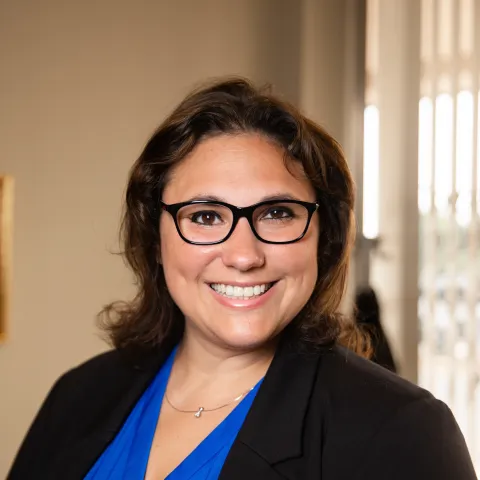
The TRIAD program was a launching point for my career. My postdoctoral training through this T32 provided me with skills and knowledge that opened doors I didn’t know existed and have led me to a successful early-career phase as faculty.
Learn More
Connect With Us
Email Us
Reach out to Sanders-Brown Training with questions about the TRIAD program, and a team member will be in touch.
Join Our List
Subscribe to receive notifications and updates about the TRIAD program