A new model of home care for patients struggling with cognitive impairments has found success in clinical trials.
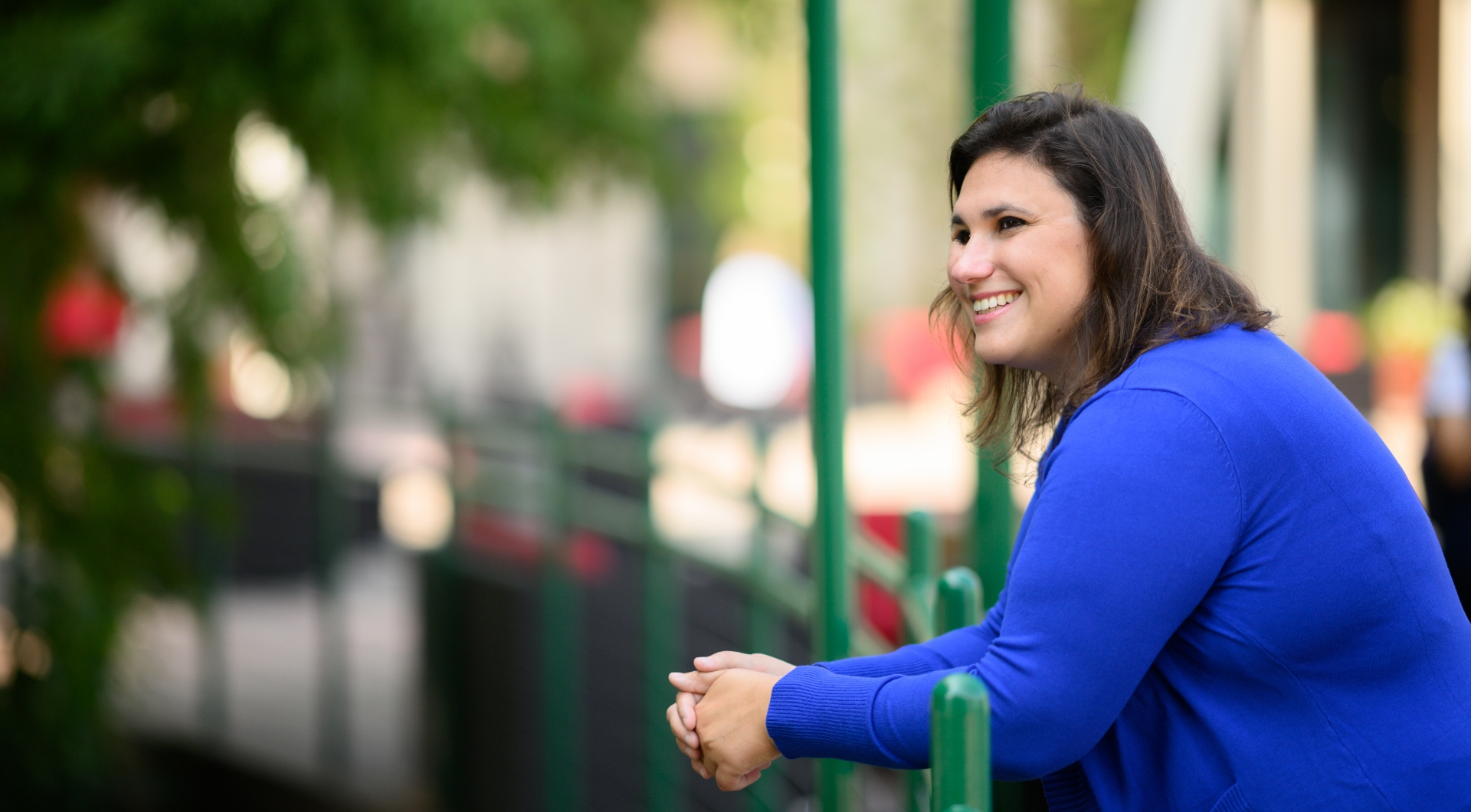
The Harmony program was founded by Elizabeth Rhodus, Ph.D., assistant professor of behavioral science, and it has the potential to change how caregivers and patients overcome cognitive or behavioral challenges and achieve more peaceful living conditions.
The program provides a structured clinical framework that trains and guides caregivers to support people living with dementia and other neurological disabilities by changing their environment to emphasize independence in daily activities.
Getting Off the Ground
People living with dementia, traumatic brain injuries, or other mental health challenges have historically had few treatment opportunities due to the individualized nature associated with these medical issues. Rhodus understands this as both a clinician and a former patient.
At 16, Rhodus was in a serious car accident in which she sustained a severe traumatic brain injury. As she recovered, she relearned how to walk and talk. However, her memory loss was substantial, and the healthcare team encouraged her family to seek long-term care options as they did not expect her memory capacity to improve.
“Defiantly, my mom pushed back. She dove into the science of neuroplasticity, which is the brain’s ability to heal and grow,” said Rhodus. “Science has discovered that enriched environments filled with preferred activities allow the brain to build connections, promote development and foster healing.”
Rhodus’ family put emphasis on creating a home that functioned as an enriched environment, full of music, exercise, creative outlets and traditional therapies. Little by little, she fully recovered.
“Your environment is not just where you live. It is actively building up or breaking down your brain every single day. My environment allowed me to become a scientist who studies the very thing that saved me,” she said.
Fascinated by her own recovery and eager to explore the brain’s ability to respond to new environmental conditions, Rhodus earned a clinical degree in occupational therapy as well as a Ph.D. in gerontology.
The concept of the Harmony program grew out of her work treating children living with autism spectrum disorder, using environments to support daily function. When her career led her to geriatric care, Rhodus held on to the concept of using a person’s environment to adjust their behavior.
“My background allowed me to recognize that how we interact with our environment can change how we function. I simply moved from neurodevelopment to neurodegeneration,” she said.
Understanding the Basics
According to a 2025 caregiving study led by the National Alliance for Caregiving and the AARP, more than 63 million Americans provide ongoing complex care to adults or children with a medical condition or disability.
While caregiving is an essential service, it takes a significant toll on the caregiver. The Center to Advance Palliative Care (CAPC) shared that 64% of caregivers report high emotional stress and 45% report high physical strain.
“When caring for someone, you want them to be comfortable or without pain. You strive for moments where you recognize that the person you’re taking care of is okay, that you’re okay and your home is calm. Creating more of those moments is the underlying goal of the Harmony program,” said Rhodus.
Achieving this peaceful equilibrium requires buy-in from the caregivers, the clinicians, and the patients themselves.
Within the Harmony program, occupational therapists work closely with caregivers to understand the individual challenges associated with their loved one. The patient and caregiver complete several assessments to better understand their day-to-day interactions. Once a problem area, such as showering, using the bathroom or riding safely in the car has been identified, strategies to better support comfort, function and participation begin to take shape.
“The Harmony program tailors intervention strategies to make the caregiver’s life a little bit easier and support the function of the patient during challenging activities,” Rhodus said.
Harmony in Action
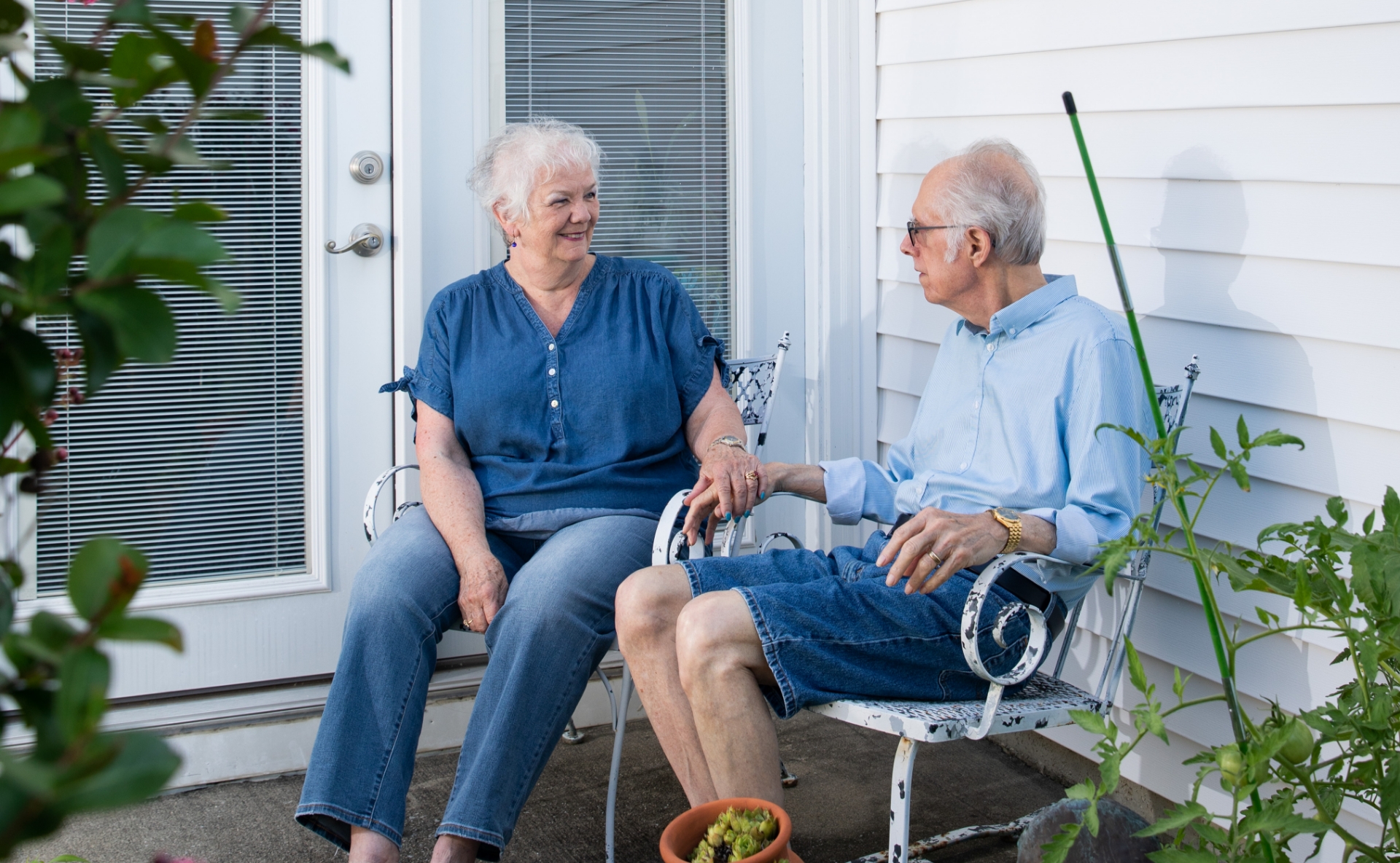
Rhodus shared the story of “Mary”, who presented with apathy, which is a symptom of dementia that decreases a person’s ability to initiate and engage in daily activities. Mary would often sit in her chair all day. Her husband remained optimistic and wanted to help her be active, but he was unsure how to help.
“Apathy is tough because it can reflect cognitive impairment in people with dementia and lead to body weakness, but caregivers don’t find this symptom as overly worrisome," she said. "People with apathy often sit and be quiet. But, without regular engagement and activity, the patients are at a heightened risk for falls, infections, and decreased overall cognition."
One thing that made Mary light up was her grandchildren, but it was difficult for her to engage when they visited. Collaborating with Mary’s husband, Rhodus appealed to her sense of touch by placing different-sized and textured therapy balls in her hands to help alert her brain to stimulation.
“We taught Mary’s husband to put the ball in her hand and helped her throw it. Once she got started and her body was in motion, she could keep going. Mary had the strength and the ability; she just needed help to get started. Then, every weekend when the grandkids would come over, she had a whole basket of balls she could toss with her grandkids. She would stand up, work on her balance, engage with her family, and have fun,” said Rhodus. “We gave Mary’s husband the tools to help understand what she needed and helped pull Mary out of that shell of apathy.”
Another strategy in Harmony is environmental cueing. For example, a person with dementia may visit the kitchen at the same time every day, and they begin searching for something by opening cabinets, but they don’t know what they’re looking for.
The caregiver may predict that the person wants a snack and place a peanut butter and jelly sandwich on the counter. When the person comes to the kitchen, they react to the environment in a more positive way, and a friction point is eliminated.
“We teach the caregivers how to implement strategies like this. It’s tailored around specific needs each person may experience,” Rhodus said.
Rigorous and Reproducible
As the seed of Harmony began to grow, Rhodus developed the framework for three National Institutes of Health (NIH)-funded clinical trials.
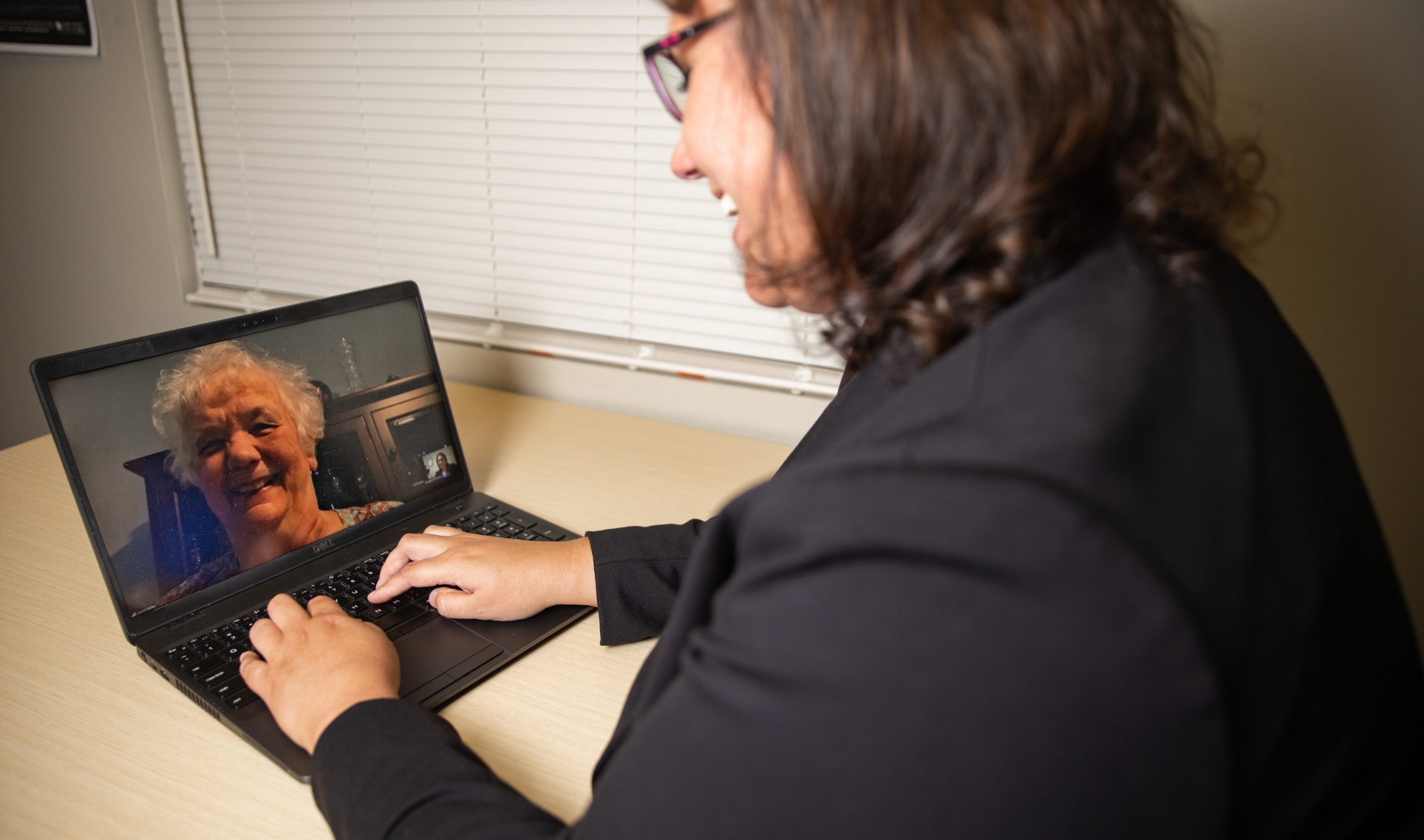
The first was a “proof of concept” trial, delivered via telehealth during the pandemic. Rhodus was the interventionist, providing training to caregivers associated with the UK Sanders-Brown Center on Aging Alzheimer’s Disease Research Center.
“In a clinical trial, it’s all about what you can measurably reproduce. Our first trial proved that we could implement and reproduce the intervention protocol over and over,” she said.
The second trial examined the feasibility for rural caregivers to participate in the program. It sought to answer questions like: “Would they stay engaged for an eight-week course? Would they have regular access to Wi-Fi and other resources?” The study was successful in rural recruitment and participation.
The third trial was a two-arm randomized controlled trial funded by a NIH K23 (Mentored Patient-Oriented Research Career Development) Award. This study looked at patient outcomes. “Is Harmony improving function or outcomes in the patients that were cared for?” Rhodus will be sharing the results of that trial at the Alzheimer’s Association International Conference in July.
“All of these have been the prep work to get to a phase II efficacy trial,” said Rhodus. “These early trials have proven that Harmony is feasibly delivered over telehealth, especially in difficult conditions like rural Appalachia. We’re showing promise for improvements in patient function among neurodegenerative conditions like dementia in which function is only expected to decline. We are now ready to take Harmony to larger samples across the country.”
More than a dozen sites affiliated with the NIH Alzheimer’s Clinical Trial Consortium have signed up to offer the Harmony program for a planned phase II randomized controlled clinical trial.
“We’re going to train occupational therapists from across the country, specific to the regions that we’re serving, so we can make sure we integrate the geographically relevant components of care,” she said.
Each participating occupational therapist completes an eight-week evidence-based training course known as the Harmony Certification Program. Once they’ve graduated, the therapists are prepared to assess the patients and train the caregivers for their role in the process.
“Teaching the occupational therapy clinicians how to understand and implement these concepts is how we scale this program for a national impact,” said Rhodus. “For the clinicians, it’s more of a technical practice. For the caregivers, it’s a pragmatic or practically applied implementation.”
Spreading the Good News
Today, the Harmony program lives in clinical trials and clinical research, but the goal of Rhodus and her growing team is to take the program nationwide, translating the research into clinical practice so people across the country have access to a new form of compassionate care.
“There is hope even in the face of terminal conditions. We can’t always take diagnoses away, but we can help people find a little bit of peace,” she said. “We empathetically affirm that times can be really hard, and then we encourage hope through the Harmony program.”
To learn more about the Harmony program, visit www.ukhealthcare.uky.edu/harmony. If you or a loved one is interested in connecting with a representative of the Harmony program, email engagedaging@uky.edu.
Research reported in this publication was supported by the National Institute of Diabetes and Digestive and Kidney Diseases of the National Institutes of Health under Award Numbers T32AG057461 and K23AG075262. The content is solely the responsibility of the authors and does not necessarily represent the official views of the National Institutes of Health.
Research reported in this article was made possible in part by a grant from the Pat Summitt Foundation.
Research reported in this article was made possible in part by a donation from Anthem Blue Cross Blue Shield.