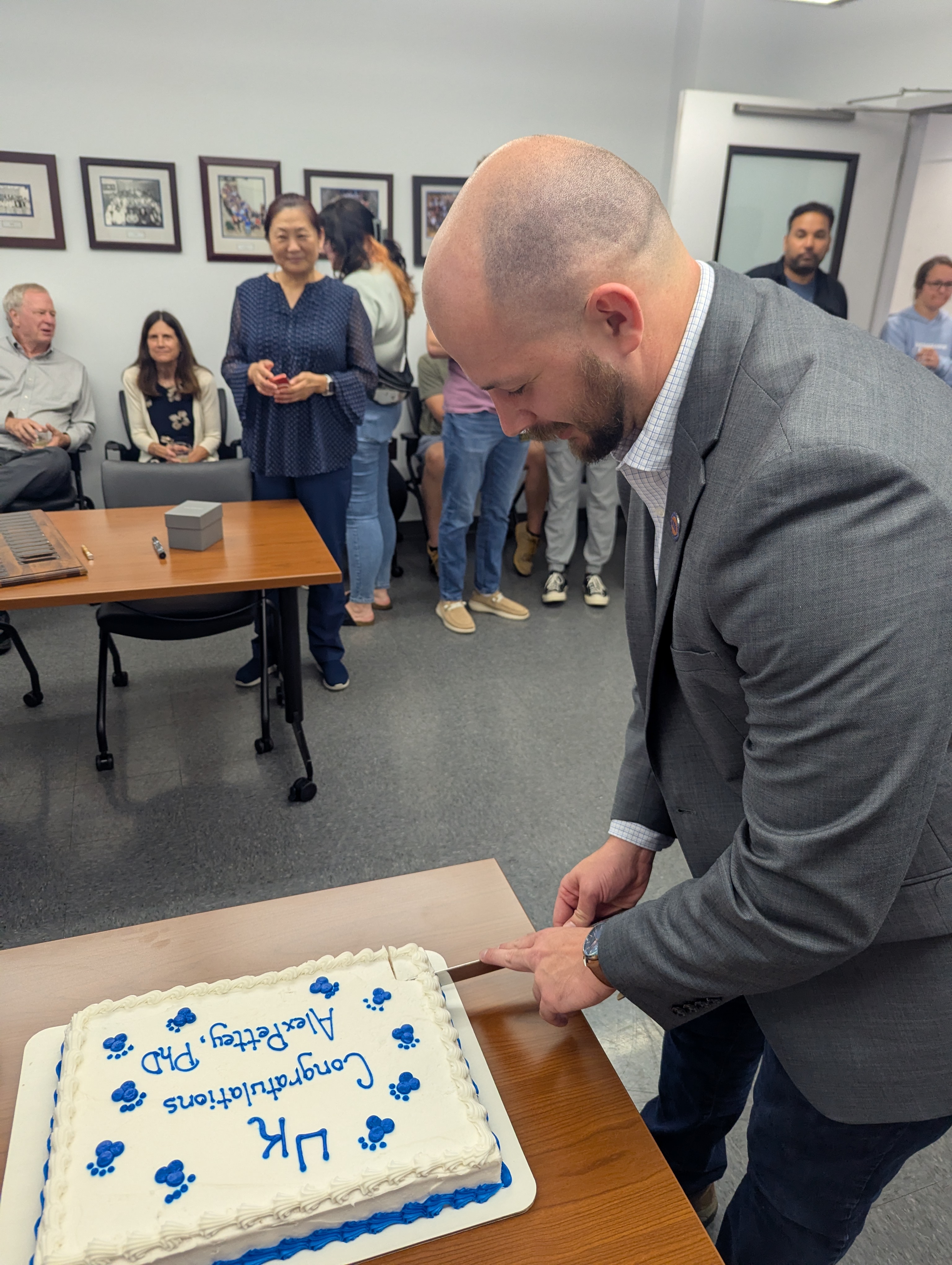
On Tuesday, June 30, 2026, Alex Pettey successfully defended his dissertation and earned his doctoral degree in physiology. Congratulations, Dr. Pettey!
A Tale of Two SERPINs: Pathologic and Protective Roles of AGT and PAI-1 in Metabolic and Cardiovascular Disease
Metabolic and cardiovascular diseases are leading causes of morbidity and mortality worldwide. Conditions such as metabolic dysfunction-associated steatotic liver disease (MASLD), aortic aneurysm, and cardiac fibrosis have limited pharmacological therapies, underscoring the need for deeper mechanistic investigations. Serine protease inhibitors (SERPINs) have been implicated in these pathologies and represent potential therapeutic targets. Despite structural homology, SERPINs regulate diverse physiological processes through both protease inhibition and non-inhibitory mechanisms. This dissertation examines the roles of two SERPINs, angiotensinogen (AGT) and plasminogen activator inhibitor-1 (PAI-1), in preclinical models of metabolic and cardiovascular disease to identify novel mechanisms that may inform future therapeutic strategies. AGT, a non-inhibitory SERPIN, is the unique substrate of the renin-angiotensin system (RAS). While hepatocyte-specific AGT deficiency prevents diet-induced liver steatosis, this protection is not recapitulated by inhibition of canonical RAS signaling. Conversely, expression of des(AngI)AGT, which lacks the substrate for angiotensin peptide production, restored steatosis in hepatocyte-specific AGT-deficient mice, suggesting a RAS-independent role for AGT. To identify the underlying mechanisms, integrated transcriptomic analyses were performed in a mouse model of diet-induced steatosis. This approach revealed that hepatic AGT deficiency downregulates key genes related to cell division at the initiation phase of liver steatosis, providing a novel mechanistic link between AGT and MASLD. PAI-1 is the primary inhibitor of plasminogen activation, regulating fibrinolysis and extracellular matrix degradation. While PAI-1 deficiency often protects against organ fibrosis in experimental models, PAI-1 deficient mice and humans develop spontaneous cardiac fibrosis. Furthermore, PAI-1 is markedly elevated prior to the development of ascending thoracic aortic aneurysm (ATAA), yet its functional role remains unclear. This dissertation found that PAI-1 deficiency did not alter angiotensin II (AngII)-induced ATAA, but, consistent with prior reports, augmented cardiac fibrosis. Temporal and spatial characterization revealed that cardiac hemorrhage and cardiomyocyte loss preceded fibrosis in PAI-1 deficient mice. These findings were reproduced by infusion of a pressor dose of norepinephrine, suggesting that mechanical stress, rather than hormonal signaling, initiates the pathology. Finally, mice harboring loss-of-function point mutations demonstrated that the plasmin-inhibitory function of PAI-1 is essential for preventing hemorrhage and fibrosis under hemodynamic stress. Collectively, this dissertation demonstrates that AGT and PAI-1 occupy distinct pathological niches. While hepatic AGT deficiency suppressed cell division-associated genes at the initiation of steatosis, PAI-1 deficiency promoted hypertension-induced cardiac injury through its plasmin-inhibitory function. These findings advance our understanding of SERPIN biology and highlight context-dependent therapeutic implications for targeting AGT and PAI-1 in metabolic and cardiovascular diseases.