
Thank you for your interest in the UK College of Medicine Otolaryngology – Head and Neck Surgery Residency Program. We believe we have an outstanding residency experience and look forward to sharing information about our program with you.
Program Overview
PGY-1
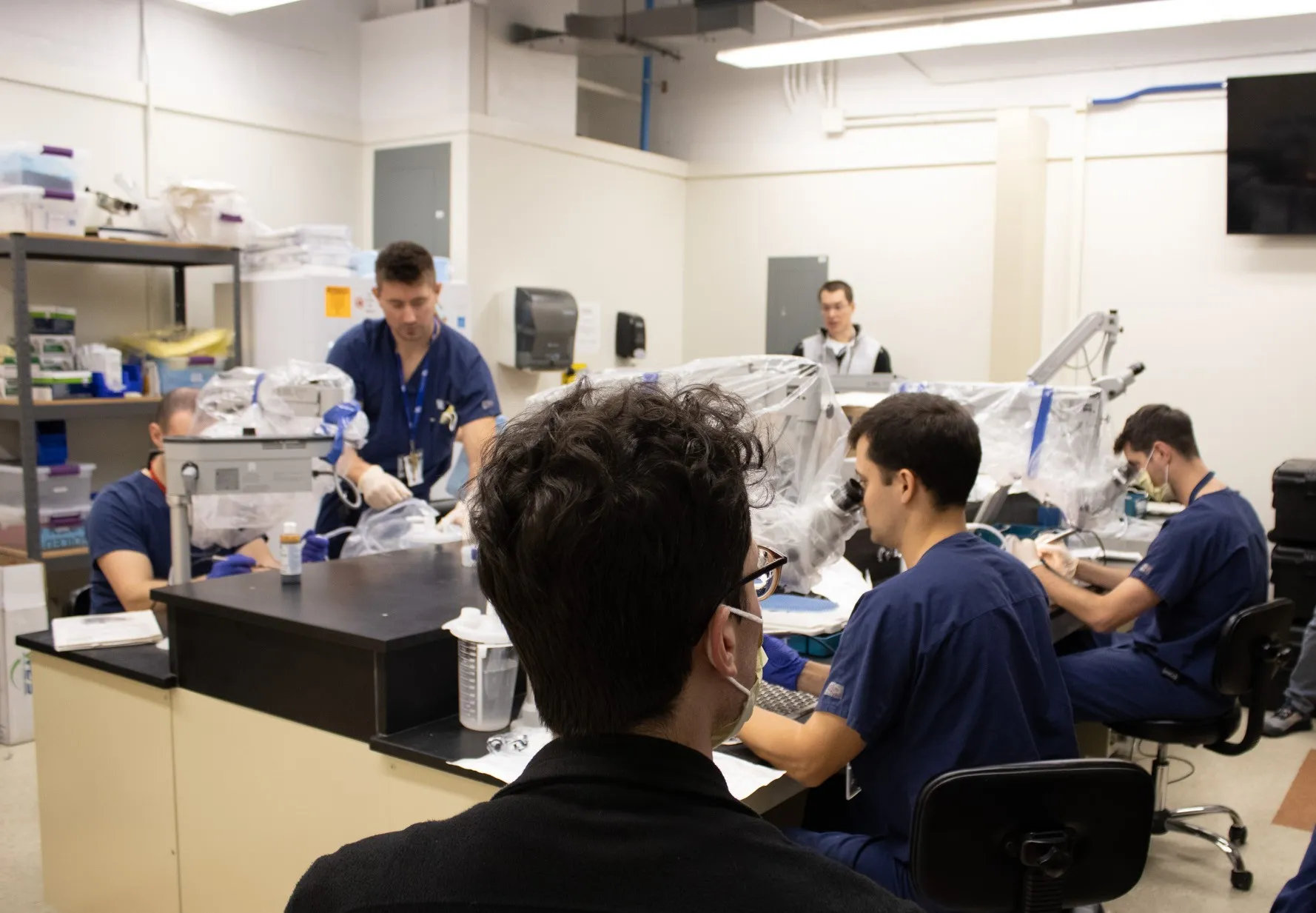
Internship training consists of twelve one-month rotations designed to build a strong foundation in both otolaryngology and general surgical care. Interns spend six months on the Otolaryngology – Head and Neck Surgery (HNS) service, with additional rotations in pediatric surgery, endocrine surgery, critical care (ICU) medicine, oral surgery, and radiation oncology. This year emphasizes proficiency in pre- and post-operative patient management and the development of fundamental operative and clinical skills. Interns often serve as primary surgeons for less complex cases and assist in more advanced procedures, while also taking primary daytime floor call. Beyond clinical training, the internship year provides insight into hospital systems across the A.B. Chandler Medical Center and Veterans Affairs Hospital.
PGY-2 and PG-Y-3
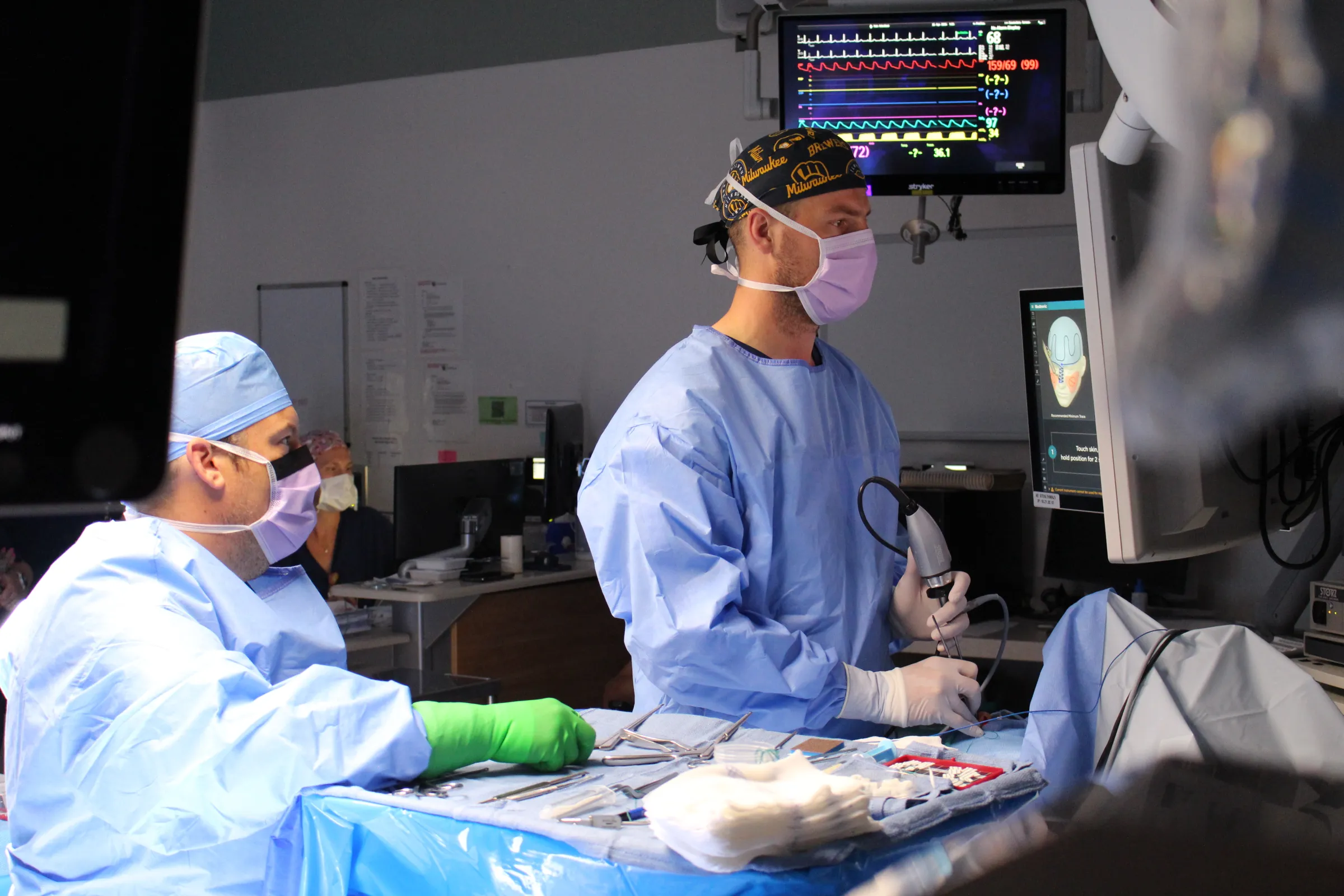
During PGY-2 and PGY-3, residents build on foundational skills while assuming progressively greater clinical and operative responsibility. PGY-2 residents begin by assisting attending physicians and senior residents, gradually advancing to serve as primary surgeons on less complex cases under close supervision. By PGY-3, residents take on more complex procedures as primary surgeons and refine their skills through direct, one-on-one operative experience with attending physicians. Residents also rotate weekly gaining community-based experience. Across both years, residents play a central role in patient care by staffing consults and managing primary after-hours call at multiple institutions, including A.B. Chandler Medical Center, the Veterans Affairs Hospital, and Good Samaritan Hospital.
PGY-4 and PGY-5
PGY-4 and PGY-5 residents function as senior and chief residents, leading their teams and serving as primary surgeons for the majority of cases with attending supervision. They take on significant responsibility in both clinical care and education, supervising junior residents and acting as resident teachers. Chief residents are also responsible for coordinating daily clinical and operative schedules, organizing call coverage, and managing add-on cases. Senior residents take back-up call from home and oversee after-hours surgical emergencies. Training continues across multiple clinical and operative sites, including A.B. Chandler Medical Center, the Center for Advanced Surgery, the Veterans Affairs Hospital, and Good Samaritan Hospital with an emphasis on multidisciplinary collaboration.

History


Program Leadership
Residency Program Director
Brett Comer, MD, MBA, FARS
- Professor
- Vice Chair for Education
- Residency Program Director
Associate Program Director

Nikita Gupta, MD
- Associate Professor
- Associate Residency Program Director
- Division of Facial Plastic and Reconstructive Surgery
For more information, contact:
Saralyn Buck
- Residency Program Coordinator