
Research
Research Mission Statement
The research mission of the UK College of Medicine Department of Psychiatry is to conduct highly collaborative, pioneering extramurally funded research through multidisciplinary teams of scientists focused on improving the lives of the citizens of the Commonwealth of Kentucky and beyond. The department also aims to educate and train the next generation of researchers in translational and clinical research methods with a focus on vulnerable populations to decrease health disparities.
The department of psychiatry is actively engaged in five overlapping areas of research with children, adolescents, and adults focusing on:
1.Trauma
2. HIV
3. Substance use and addiction
4. Suicide prevention
5. Transcranial Magnetic Stimulation
The department’s research program is led by Dr. Liz Arnold, whose work includes PCORI-funded research focused on behavioral intervention clinical trials on mental health, HIV prevention and treatment, substance use, and suicide prevention with adolescents and young adults. Her work reflects the department’s commitment to advancing patient-centered research that addresses health disparities and improves outcomes for vulnerable populations.
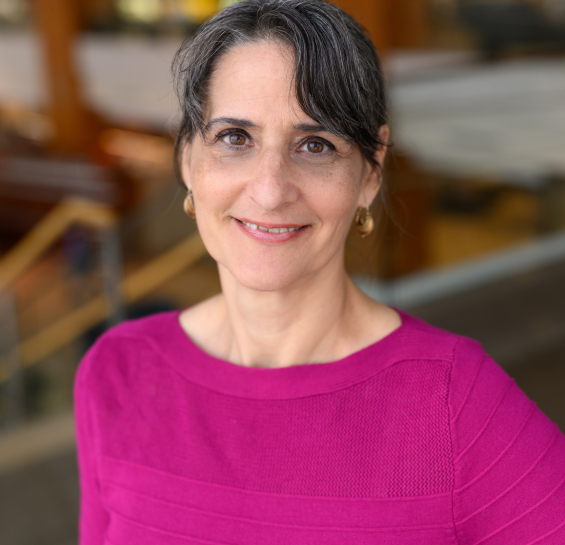
Research Spotlight : Alison Schreiber, PhD
What is your educational background?
I attended Washington University in St. Louis for my undergraduate studies. There, I majored in Psychological and Brain Sciences and minored in Mathematics and Political Science. I then began my graduate studies in Clinical Psychology at Pennsylvania State University. As part of the clinical psychology program, I received my master’s in psychology from Penn State in 2018. In 2020, my graduate advisor moved his research lab to the University of North Carolina at Chapel Hill, and I transferred to UNC to continue my research with him. As the last component of my clinical training, I completed my predoctoral clinical psychology internship at the Ann Arbor VA from 2022-2023. In August 2023, I received my PhD in Clinical Psychology from UNC. To continue my research training, I completed my postdoctoral fellowship at the University of Pittsburgh, where I was supported by a NIH T32 Fellowship.
What is your main area of research and what projects are you currently working on?
My research focuses on understanding the lower-level social, cognitive, and affective processes that underpin maladaptive decisions and interpersonal difficulties. My work combines multimodal data — such as experimental tasks, neuroimaging, and behavior in daily life — with advanced quantitative methods (e.g., machine learning, computational models) to understand these processes. I am especially interested in how these lower-level processes lead to problems in daily life among people with mental health conditions, such as individuals with borderline personality disorder.
My current work focuses on understanding the learning processes that give rise to maladaptive decisions and links these altered learning processes with personality traits. For example, I recently conducted a large online study in which participants completed five different experimental tasks to assess various learning processes (e.g., social vs. nonsocial learning) and completed self-report measures of personality and mental health symptoms.
How did you become interested in this area of research?
I initially became interested in personality and mental health during college when I took a course on Personality and Psychopathology. I was fascinated by how personality could influence both mental and physical health outcomes. This experience prompted me to join the St. Louis Personality and Aging Network study as a research assistant. As a research assistant in the lab, I found myself especially interested in the components of the study that examined the impacts of interpersonal processes on health. When I applied to graduate school, I ended up applying to work in labs that studied interpersonal processes in personality disorders. The lab I ended up joining for graduate school happened to also focus on decision-making processes in borderline personality disorder. As I continued my work in the lab, I quickly began to appreciate how examining decision processes can help provide insight into how interpersonal difficulties arise.
What do you hope will be the main impact or benefit of your research?
In shedding light on the social, cognitive, and affective processes that lead to interpersonal difficulties and decisions that do not serve people in the long run, I hope my work can identify novel mechanistic treatment targets. With the help of translational researchers, these insights can hopefully lead to more effective treatments for various mental health conditions.
What do you enjoy most about conducting research at the University of Kentucky?
My favorite part about doing science is the people. Over the years (and many places that my training has taken me), I have developed collaborations that make doing research much more fun. Researchers at the University of Kentucky are remarkably open to new collaborations, and I have really enjoyed getting to know fellow scientists at UK, find points of connection, and working on various projects together.
Research Faculty


Jessica G Eslinger, PhD, LCSW
- Assistant Professor

Stephanie K Gusler, PhD
- Assistant Professor


Amy Lynn Meadows, MD, MHS
- Associate Professor
- Director, Child and Adolescent Psychiatry Division
- Associate Program Director, Triple Board Residency Program



Ginny Sprang, PhD
- Tenured Professor of Psychiatry
- Executive Director, Center on Trauma and Children


Adrienne Whitt-Woosley, PhD
- Associate Professor
- Associate Director, Center on Trauma and Children
Research Staff



Affiliations
Department of Behavioral Science
Our mission is to teach and mentor medical and graduate students to be accomplished practitioners, teachers and researchers, with knowledge, skills, and attitudes shaped by research and scholarship in medical behavioral science.
Center on Research for Violence Against Women
As an academic area of study, the crimes of domestic violence, sexual assault, stalking, and their attendant risks present complex challenges. These cannot be completely addressed without a cross-discipline, content-specific approach which integrates practice, theory, and research. The Center for Research on Violence Against Women is designed to afford such an opportunity.
Laboratory of Human Behavioral Pharmacology (LHBP)
Research in the LHBP uses principles and techniques of pharmacology, behavioral analysis, and neuroscience to determine the underpinnings of drug use disorders and develop interventions. Facilities are available for the conduct of outpatient and inpatient experiments, as well as clinical trials.
Center on Trauma and Children
The University of Kentucky Center on Trauma and Children (CTAC), located in the College of Medicine, Department of Psychiatry is dedicated to the enhancement of the health and well-being of children and their families through research, practice, policy and the dissemination and implementation of evidence-based approaches to address child abuse and trauma.
Center on Drug and Alcohol Research
The Center on Drug and Alcohol Research (CDAR) conducts research into the biological, psychological, sociopolitical, and clinical aspects of substance abuse and related behavior. The Center conducts federally funded and state-funded research on substance abuse and related problems areas such as intimate violence, criminal justice settings and characteristics of rural substance use.
Eastern State Hospital
At Eastern State Hospital, we provide excellent mental healthcare that instills hope, inspires recovery and improves overall well-being for Kentuckians. Visit our About webpage to learn more about our mission, vision, and values.
Center for Clinical and Translational Science (CCTS)
Through research funding, training, infrastructure, and community engagement, we facilitate innovative team science to address these and other critical health issues.