Brittany Smalls, PhD writes article for UKNOW

College of Medicine Celebrates African-American Trailblazers
During February's celebration of Black History Month, the University of Kentucky College of Medicine’s Faculty of Color Network (FCN), with funding from the College of Medicine Diversity & Inclusion Office led by Dr. Renay Scales, honored two living legends and pioneers of the college.
Blog: Research Isn't 'One Size Fits All'
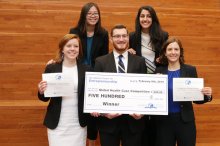
Global Health Case Competition Winning Team to Compete at Emory
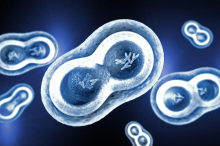
Five students from the University of Kentucky placed in the UK Global Health Case Competition (GHCC), which rallied both undergraduate and graduate students from various colleges to collaborate on revolutionary research. Together, they worked toward a common goal — solving a global health concern. This year, competitors were tasked with tackling refugee health.
Everything is Science: Opposites Attract
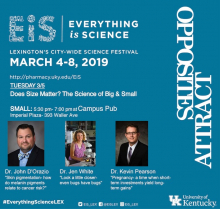
Organized by the College of Pharmacy, Dr. D'Orazio and Pearson will be the featured speakers among others.
http://pharmacy.uky.edu/news/everything-science-opposites-attract
Save the Date: 2019 UK Cardiovascular Research Retreat
Please Save the Date for the 2019 UK Cardiovascular Research Retreat, Friday, May 10th from 2:00-5:00 pm at the Boone Center. Lunch will be provided from 12:00-1:00 pm.
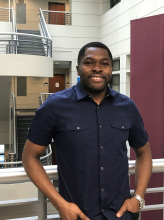
Congratulations to Dr. Anye Wamucho!
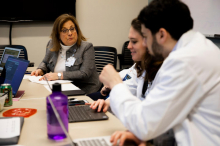
UK Medicine's Experiential Research Demonstrates Power of the TEAM
At the intersection of exceptional patient care and remarkable education is the willingness and desire to adapt. The most forward-thinking health care delivery systems embrace interprofessional collaborative practice as a way to improve quality of care.
The University of Kentucky Department of Family and Community Medicine has embraced transformation of care by providing an early interprofessional clinical experience: the TEAM Clinic model.
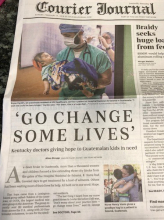
UK plastic surgeon and chief resident featured in front page Courier Journal story on Guatemala mission
James Liau, MD, and Duane Wang, MD of UK Plastic Surgery were among several Kentucky physicians featured in a front page story of the Sunday, February 19 Louisville Courier-Journal. The story reports on the mission work that Lexington-based Children of the Americas (COTA) extends to children in Guatemala. Dr. Liau is a UK Plastic Surgery faculty member and an alumnus of the UK plastic surgery residency program. He volunteers annually to work with COTA missions. Dr. Wang is in his chief year with the UK residency program.
Appalachian Research Day, Come Sit on the Porch: Calls for Proposals
The fifth annual Appalachian Research Day, Come Sit on the Porch, will be hosted September 18, 2019 by the University of Kentucky Center of Excellence in Rural Health (UK CERH) in Hazard, KY.