Kentucky Homeplace has been awarded a second gift of $150,000 from the Anthem Foundation to continue work on a special research project," Improving Diabetes Outcomes Phase Two (I DO 2)." The gift enables Kentucky Homeplace to expand the work in diabetes self-management education (DSME) that it began with the first gift received from the Anthem foundation in 2011, said William Mace Baker, director of Kentucky Homeplace. The DSME model involves Kentucky Homeplace community health workers (CHWs) supporting nurse-led education modules.
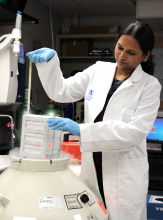
ky_homeplace_julia_with_client.jpg
By Chris Ritchie, Editor, Hazard Herald Researchers with the University of Kentucky are set to begin a study this month to evaluate the effectiveness of smoking cessation when coupled with weight management, and they’re looking for local residents to take part. In 2012 Kentucky recorded the highest rate of smoking in the nation, and the 10th highest rate of obesity.
putitoutandkeepitoff.jpg

NIH offers a large a variety of social media outlets to help investigators stay informed.  Follow this link to a summary page of the many outlets NIH is using to increase communication.   

In July, the University of Kentucky's Jennifer Havens sat on a panel in Washington D.C., addressing the current U.S. congressional ban on federal funding of syringe services programs (SSPs) advocating that releasing the ban will positively affect the rising abuse issue. Havens stated that releasing the ban would create a positive effect on the fight against rising injectable drug abuse levels in Kentucky and throughout the nation. Havens is an epidemiologist in the UK College of Medicine Department of Behavioral Science.

From NIH Email - NIH eSubmission Items of Interest - August 21, 2013

Are you ready for our move to updated electronic application forms (FORMS-C)?

We’ve been busy preparing for our transition to updated application forms for most grant programs (NOT-OD-13-074). Our FOAs now have FORMS-C application packages and old B1 and B2 packages have been set to expire.

Here are some updated resources you may want to check out:

The NIH webinar, “Using ASSIST to Prepare and Submit Multi-Project Applications to NIH,” as presented on August 13 is now available for viewing at the following link:  http://grants.nih.gov/grants/webinar_docs/webinar_20130813.htm.  If you are thinking of submitting a multi-project application for an upcoming deadline, take some time to view this presentation and/or the associated PowerPoint slides also available at this link.  NIH will require electronic submission for all P01, P20, P50 and U19 appl

Transporters function in cellular influx and efflux to maintain homeostasis for normal cellular and tissue physiology. Therefore, they play an important role in eliminating xenobiotics from the body.
Slide1.jpg
Slide1.jpg
Cancer research at the Department of Toxicology and Cancer Biology involves multiple laboratories with various focus areas. They include chemical carcinogenesis, metal carcinogenesis, tumor suppressor genes, gene regulation during carcinogenesis, redox-mediated mechanisms of tumor suppression, reactive oxygen species and cancer, cell signaling in cancer biology, environmental risk factors in cancer, and cancer prevention.
Wei has been awarded a predoctoral fellowship from American Heart Association 07/01/13 – 6/30/14. Her project title is: The Role of Mrp1 in Protecting against Doxorubicin - induced Cardiotoxicity.
It appears tiny and inconsequential enough, but the "super mouse" — created by researchers at the University of Kentucky Markey Cancer Center some six years ago — has spawned plenty of new research into preventing and/or treating many types of cancer. Back in 2007, cancer researcher Vivek Rangnekar and his team announced that they discovered a gene — known as Par-4 —that specifically kills cancer cells without killing normal cells.
supermouse.jpg
supermouse.jpg