When it comes to advancing sports medicine, collaboration across borders plays a critical role.
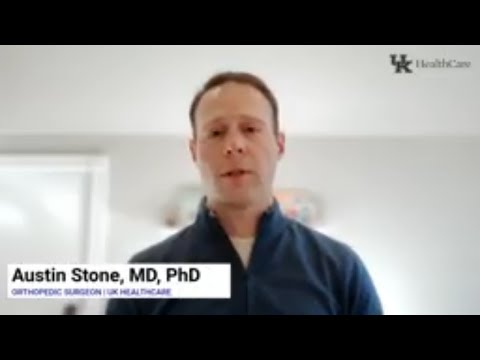
Austin Stone, MD, PhD, an orthopedic surgeon, sports medicine physician, and team doctor for several UK athletic programs was selected for the prestigious American Orthopedic Society for Sports Medicine (AOSSM) Traveling Fellowship in 2025. The experience took him across Asia and offered a rare view into how other countries care for athletes and approach orthopedic innovation.
In an episode of UK HealthCast, Dr. Stone talks about that experience. Listen to Dr. Stone’s conversation below or continue reading for some takeaways from it.
A foundation in sports and sports medicine
Dr. Stone brings both personal athletic experience and surgical expertise to his work at UK HealthCare. He also serves as a team physician for UK, Lexington Sporting Club and Eastern Kentucky University. These roles place him at the intersection of elite athletics and community care.
He understands the camaraderie and demands of sports firsthand. His athletic background spans running, cycling, tennis, and golf, shaping his commitment to helping athletes safely return to the activities they love.
The AOSSM fellowship is designed to elevate the next generation of academic sports medicine leaders through international exchange. Being selected represents an opportunity to expand perspectives on patient care, innovation and global practice patterns.
A journey across Asia
The 2025 fellowship cohort traveled throughout Asia, beginning in Hong Kong and continuing to mainland China, South Korea and Japan. The fellowship concluded at the Japan Orthopedic Society meeting for sports medicine.
Throughout the trip, fellows exchanged clinical insights with international peers and observed how different health systems manage athletes across a wide spectrum of sports. In Hong Kong, for example, they visited the Hong Kong Sports Medicine Institute, where athletes train for numerous Olympic events, from swimming to table tennis to fencing.
One notable difference across countries was access to surgical resources, particularly graft materials. In the U.S., allografts (tissues from deceased donors) from tissue banks are common. But Dr. Stone noted that many international centers rely heavily on autografts (tissues from a person’s own body) due to limited availability of donated tissue.
While the commitment to patient care is universal, Dr. Stone observed meaningful cultural contrasts in access and timelines. In the U.S., patients with injuries like ACL tears are typically evaluated quickly and scheduled for surgery within weeks. In Hong Kong and China, that process may take six months or longer.
These differences highlight how healthcare systems — not clinical expertise — shape patient pathways. Beyond them, Dr. Stone found substantial overlap in surgical approaches and gained valuable insights in how surgeons adapt technique based on available materials.
“Every single one of us wants to deliver the best care possible to our patients, and this is an international expectation of surgeons,” Dr. Stone said.
This content was produced by UK HealthCare Brand Strategy.