For nearly a decade, Amanda Glueck, Ph.D., associate professor of neurology, has been exploring how virtual reality (VR) can be used in health research. What started as proof-of-concept studies with non-clinical participants has since evolved into a collaborative project with real potential to support people living with cognitive decline.
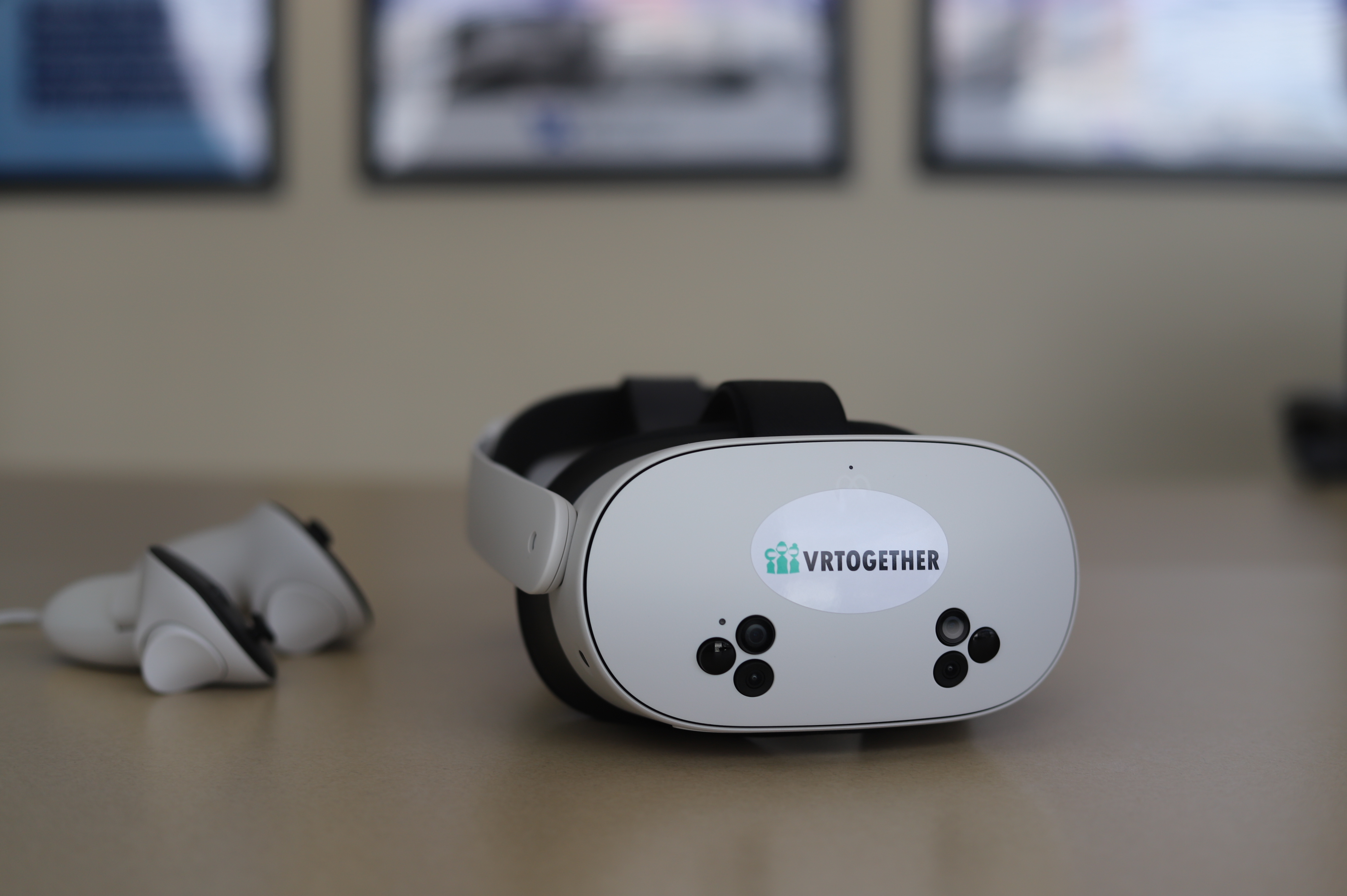
During the COVID-19 pandemic, a Lexington-based health technology company, supported by a Small Business Innovation Research (SBIR) grant, reached out to Glueck. The company, VRTogether, had received a National Science Foundation grant and had already begun collaborating with partners at UK, but hoped to transition into clinical populations.
UK alumnus and VRTogether founder and CEO Richard Hoagland had been exploring the capabilities of virtual reality technologies for a long time, but the company wasn’t thinking about health applications originally.
“We built it to be something enjoyable that provided some calm,” Hoagland said of ‘Daydream Blue’, the first multiplayer VR game launched on standalone VR headsets. The premise was simple: What if you could lie on your couch and feel like you’re in a field on a sunny day?
Over time, users began sharing how they were using the application to cope with stress, loneliness, and even seasonal mood changes.
“It opened my eyes to the idea that there could be more — if it was intentional,” Hoagland said.
That idea gained urgency during the isolation of the pandemic, when the concept of co-presence — feeling present with another person in a shared virtual space — became more than theoretical.
Glueck and VRTogether connected to discuss what was possible. Soon after, they were designing a research study to explore the benefits of virtual reality programming for patients with mild cognitive impairment.
A collaborative model
From the beginning, the research study embraced a collaborative approach. Patients and families from UK’s Alzheimer's Disease Research Center were invited to beta test early versions of the VR SingTogether program, shaping its evolution. “It was so cool to see the company create a prototype, bring it back, and adjust it based on what families here told us,” Glueck said.
The study also brings together a unique blend of disciplines. Dima Strakovsky, M.F.A, associate professor in the UK College of Fine Arts, was an early collaborator of Hoagland’s and helped develop an AI-powered tool to analyze focus group feedback, identifying themes that would otherwise take months to code manually.
Neurologists, orthopaedic therapists, social workers, and researchers from across the enterprise contributed clinical insight, while VRTogether designers and developers translated those ideas into an interactive system. The result is an immersive virtual experience grounded not only in research but in real-world feedback from the people it is designed to serve.
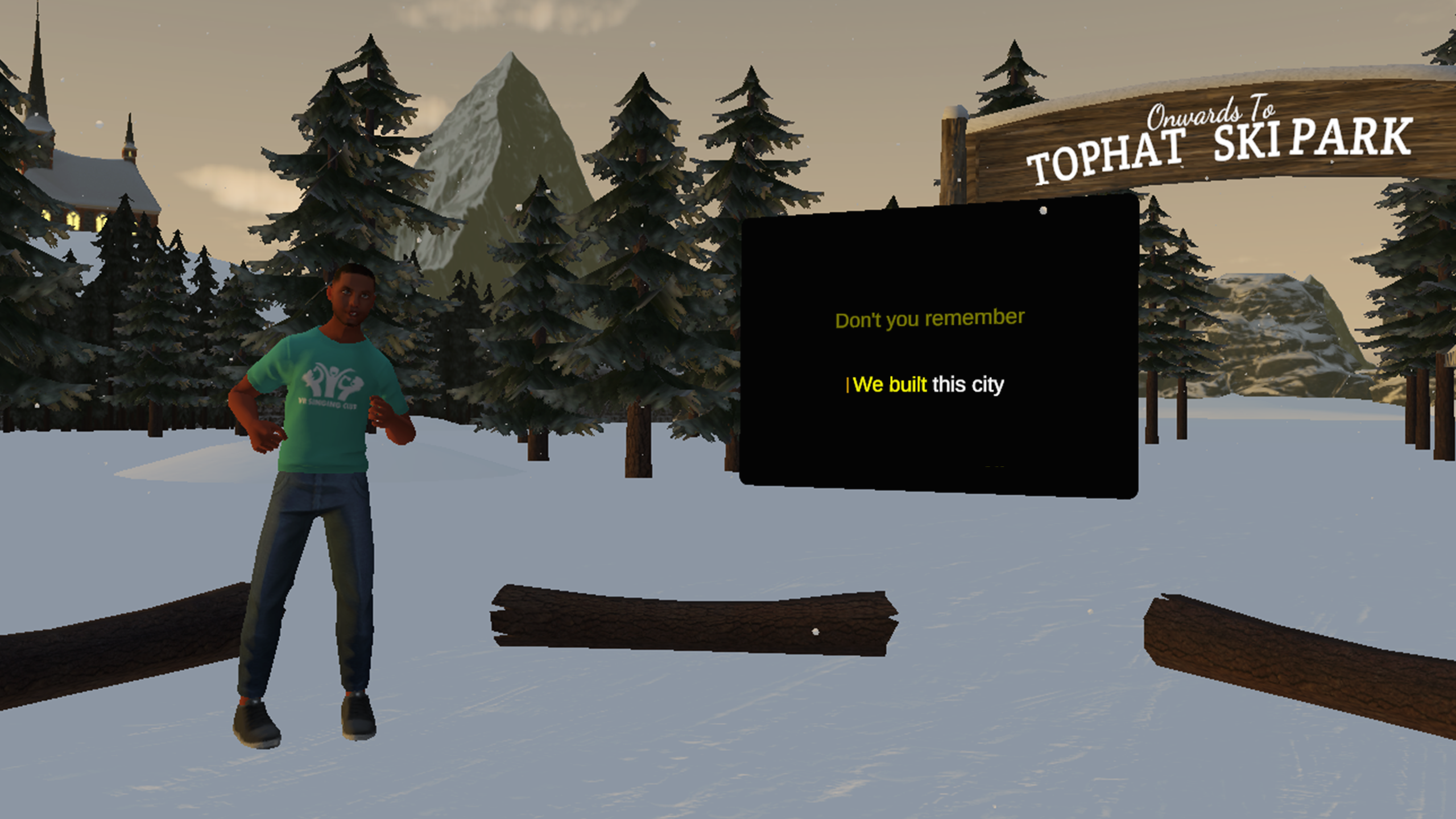
During a typical SingTogether session, participants and their loved ones slip on headsets, gather in a virtual circle, and sing familiar songs together, from “Take Me Out to the Ball Game” to “You Are My Sunshine.” The research team partnered with a UK alumna and music therapist based in Colorado, who appears as a non-playable character in the program called “Virtual Jess,” guiding participants through songs.
The participants then offer feedback during interviews, where they share what they thought of the sing-along program, whether they would feel comfortable using the program and headset on their own, and any suggestions for modifications to the virtual program.
Research has long shown that music can spark moments of joy and recognition for individuals with cognitive impairment, such as Alzheimer’s disease and other dementias. It sometimes draws out smiles, singing, or movement in people who otherwise appear withdrawn. “It’s often a glimpse of who the person was before the disease had more profound effects,” Glueck explained.
Why immersion matters
Most digital tools exist at a distance. You watch a screen. You tap a button. VR works differently, immersing users in the experience and encouraging a sense of co-presence.
For individuals experiencing cognitive decline, the connection is meaningful, and it may also be protective. Isolation and loneliness are known contributors to worsening cognitive outcomes, and the VRTogether platform is designed to address that directly by creating shared experiences that feel natural rather than simulated.
The work also builds on Glueck’s broader research in neurorehabilitation and the cognitive benefits of gaming. Prior studies suggest that video game players often demonstrate faster processing speeds, improved reaction times, and stronger visual awareness.
“If we’re seeing these benefits in healthy individuals,” she mused, “what happens when we bring this into a clinical population?”
One advantage is engagement. People are more likely to continue activities they enjoy, even when those activities are therapeutic in nature.
“Developers have spent millions, if not billions, of dollars developing these games,” she said. “But you don’t know they’re helping you as you’re playing.”
Looking ahead, VRTogether hopes to continue the collaboration with UK experts to expand the program in both size and scope. They have applied for additional funding to complete the next phase of the study — providing at-home experiences for older adults experiencing cognitive change and new activities to share with a care partner. Families have expressed interest in having more interactive activities, customizable avatars, and even AI-driven companions who can offer conversation when loved ones aren’t available.
Longer term, the hope is to make the program more accessible at home, allowing families separated by distance to still share experiences, such as a grandparent in Kentucky singing alongside a grandchild hundreds of miles away.
Extending the work into critical care
That same focus on connection, presence, and shared experience is also shaping how researchers are thinking about care in more acute settings. Just a short walk across campus, those ideas are being explored in the intensive care unit, where patients often face profound isolation and disorientation.
Anna Kalema, M.D., associate professor in the division of pulmonary, critical care, and sleep medicine, is partnering with VRTogether to improve outcomes for patients in this setting.
ICU patients face some of the highest risks for delirium, with rates estimated between 70% and 80%. The effects can be significant, including higher mortality rates, longer hospital stays, prolonged mechanical ventilation, and lasting cognitive impairment. Despite its prevalence, effective interventions remain limited.
To address this need, VRTogether has been awarded a Phase I SBIR grant to develop the virtual PARTNER program. The program is a virtual reality-based, mind-body intervention designed specifically for ICU patients, with a focus on reducing isolation, anxiety, and depression.
Patients in the ICU often experience periods of disorientation and sensory deprivation, particularly following procedures such as intubation. The absence of familiar surroundings and human connection can intensify confusion and distress.
The PARTNER program introduces guided VR experiences that aim to provide orientation, engagement, and a sense of presence during these periods. By recreating calming environments or facilitating moments of connection, the intervention is designed to reduce some of the factors that contribute to delirium.
“We see this every day in the ICU. Patients are disoriented, anxious, and feel completely disconnected from their surroundings,” said Kalema. “If we can give them even brief moments where they feel more oriented and connected, that has the potential to change how they experience critical illness.”
Kalema and her team at UK HealthCare completed the feasibility study this spring and are now analyzing the data. If successful, the approach could expand more broadly, with the goal of improving both immediate patient experiences and long-term outcomes after discharge.
A shared foundation
Underlying all this work is a simple but powerful idea: connection matters. Isolation and loneliness are well-established contributors to cognitive decline and poor health outcomes, and researchers are now asking whether immersive technology can help meaningfully intervene to improve patients’ lives. As research continues, questions remain about scalability, long-term outcomes, and how best to integrate VR into clinical care. Early signals suggest that these virtual spaces can foster moments of recognition, reduce distress, and create shared experiences where they might otherwise be out of reach.
Across settings from early cognitive decline to critical illness, the goal is not simply to introduce new technology, but to deliver innovation with meaningful, lasting impact. This work is beginning to redefine what connection can look like in modern medicine, offering patients and families new ways to remain present with each other, even in the most challenging circumstances.