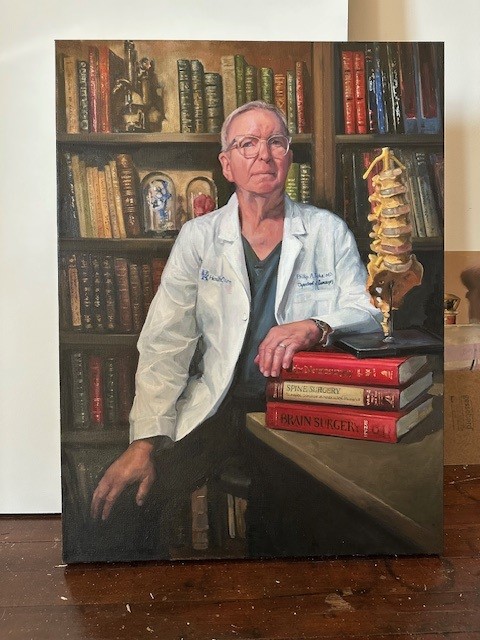
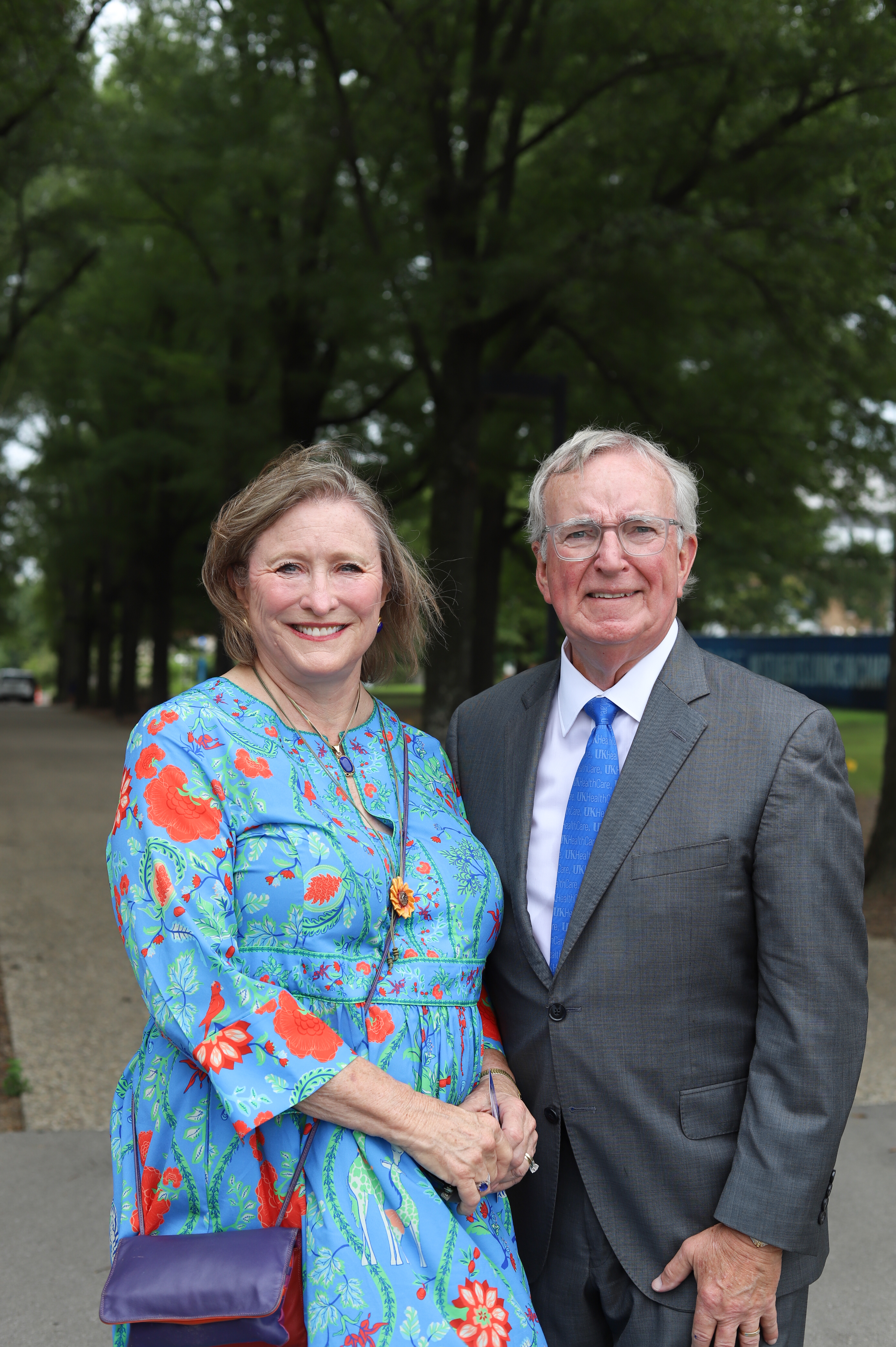
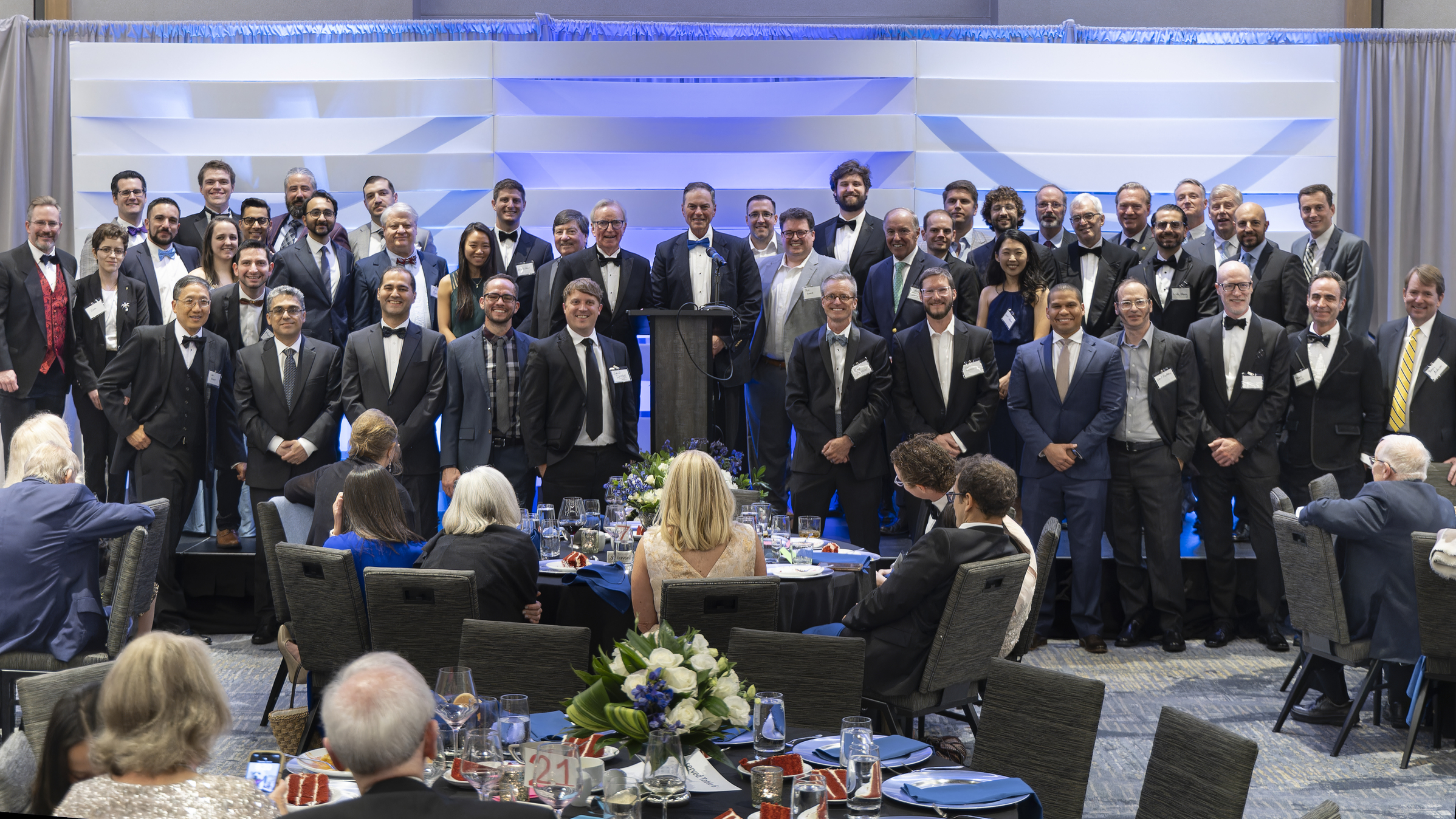
In a profession often defined by movement — new titles, new cities, new institutions — Phillip Tibbs, MD ’73, R ’79, built his legacy by staying. For more than 50 years, the renowned neurosurgeon has remained rooted at the University of Kentucky College of Medicine: as a student, a teacher, a department chair, a philanthropist and, above all, a steadfast steward of progress.
“It is not often that an academic physician chooses to stay in one place,” he acknowledged, “because many times, to move up the ranks, people have to move from one institution to another.”
For Dr. Tibbs, the decision to stay at UK was never just professional. It was deeply personal.
From humble beginnings
Born in Northern Kentucky, Dr. Tibbs was the eldest of eight children, raised in an 800-square-foot house without a car or a telephone. “We lived literally on the railroad track,” he recalled. “We took buses and walked everywhere.” Despite the financial challenges, his intellect shone early. A valedictorian, he earned a scholarship to Villa Madonna College, now Thomas More University, while he worked 20-plus hours a week unloading trucks and studying on the bus. Lessons learned during those years — to work hard, stay grounded and keep moving forward — would continue to guide him throughout his career.
When it came time for medical school, he applied to a dozen and was accepted to all. But only one was financially feasible: the University of Kentucky College of Medicine. “It had a great reputation, and I enjoyed the idea of staying in Kentucky,” he said.
Initially planning to become a neurologist, a chance encounter with Martin Blacker, MD, then-chair of the neurosurgery division, changed the course of his career. “Be a neurologist,” Dr. Blacker told him, “but be an applied neurologist.”
Dr. Tibbs took that advice to heart, finding his true calling in neurosurgery.
Building a legacy
After medical school, Dr. Tibbs joined UK as just the eighth physician in its relatively new neurosurgery residency program. As of July 2025, the program has trained more than 90 neurosurgeons.
After completing his residency, Dr. Tibbs joined the college faculty in 1979. From those early days, he was committed to building the neurosurgery department from the ground up. He cared for patients, mentored residents and helped establish regional clinics across the state.
In 2008, neurosurgery became its own department within the college, rather than a division within the department of surgery. That same year, Dr. Tibbs was named chair — a role he held for more than a decade.
As his clinical and academic responsibilities expanded, so did his impact. Throughout his career, he performed nearly 20,000 surgeries and played a pivotal role in recruiting subspecialists and expanding access to complex neurosurgical care.
Beyond the operating room, Dr. Tibbs also led efforts to enhance the patient's experience. As director of the UK Spine Center, he championed a multidisciplinary, patient-centered triage system to streamline access to care. Rather than letting patients suffer on weeks-long waitlists only to learn they weren’t surgical candidates, the new system prioritized early assessment, proper routing and fast feedback.
“Every week, I was going out to small rural areas and then driving back to Lexington,” he shared. “I couldn’t operate in those places, but I would see the patients and develop relationships with the referring physicians to get patients back to Lexington.”
Under his leadership, care coordinators began collecting medical histories and imaging up front, allowing spine surgeons to review each case within days. This meant that patients could be matched quickly with the most appropriate treatment — whether that was surgery, physical therapy or pain management — and begin recovery sooner. For many patients, especially those from rural areas, this meant faster answers, fewer unnecessary appointments and a clearer path forward during an otherwise overwhelming time.
In a health system where rural patients often struggle to get consistent care, this effort reflected Dr. Tibbs’ broader commitment to stewardship — building infrastructure, mentoring future physicians and always putting patients first.
His former trainees describe him as the embodiment of a true gentleman: kind, compassionate, and steadfast in his advocacy for patients and their care. “He set the bar high for us as residents, pushing us to meet his exacting standards,” said John Johnson, MD, R ‘98. “That relentless drive and expectation shaped me into the neurosurgeon I am today.”
Dr. Tibbs developed a reputation for being omnipresent, whether in the operating room, at the patient’s bedside or walking the hospital halls. “His energy seemed limitless. He was, and remains, the original Energizer Bunny: unstoppable, tireless and full of purpose,” said Dr. Johnson.
Leading by example, Dr. Tibbs emphasized compassionate patient care: shaking hands, making eye contact, truly listening and being thorough. “You can be the best technical surgeon in the world,” he said, “but if you don’t build trust with your patients, you’re missing something vital.”
For Kenneth Rich, MD, R’84, now practicing in North Carolina, those lessons endure. “The biggest contribution Dr. Tibbs made to me was helping me understand how important it is to have a human-to-human interaction with patients and families,” he said. “You greet everyone in the room. You ask about their lives, not just their symptoms. You make them feel seen. That’s something he taught me that I try to pass on to my students now.”
Revolutionizing the standard of care
Dr. Tibbs’ legacy is perhaps most profoundly felt in the lives extended and improved through his groundbreaking research. Alongside longtime collaborator Roy Patchell, MD, Dr. Tibbs helped overturn decades of clinical convention in the treatment of metastatic brain and spinal tumors, pioneering a new standard of care that has since been adopted worldwide.
“Phil was deeply committed to advancing the scientific mission,” said Dr. Patchell. “He built a departmental culture where research wasn’t an afterthought — it was central to everything we did.”
At a time when patients with brain metastases were often written off with the belief that such cases were untreatable, Drs. Tibbs and Patchell believed otherwise. “We were able to show that these tumors are treatable,” said Dr. Patchell. “And if they are treated correctly and aggressively, most patients live longer, better-quality lives.”
Together, the pair led a series of clinical trials that changed how physicians around the world approach metastatic disease in the central nervous system.
The first trial, published in the New England Journal of Medicine in 1990, studied patients with a single brain metastasis, primarily from lung cancer. Patients were randomly assigned to receive surgical resection followed by whole-brain radiation or radiation alone. The results were striking: only 20% of patients in the surgical group experienced recurrence, compared to 52% in the radiation-only group. Those who underwent surgery lived significantly longer and remained functionally independent nearly five times longer than their counterparts. The findings were clear: surgical intervention was not just viable but essential.
The second trial, published in the Journal of the American Medical Association (JAMA) in 1998, tackled a critical follow-up question: Is radiation necessary after surgery? Although the duo initially hoped to show that postoperative radiation could be avoided, the data revealed the opposite. Patients who received postoperative whole-brain radiotherapy had dramatically lower recurrence rates (18% vs. 70%) and were significantly less likely to die from neurological causes (14% vs. 44%) than those who had surgery alone. “This trial established that radiation was a useful treatment and did prevent recurrence of tumors,” said Dr. Tibbs.
The third study addressed spinal cord compression caused by metastatic cancer, a condition often associated with devastating pain and disability. Historically, this was treated with laminectomy, a surgical technique that removed part of the vertebra but didn’t address the tumor itself, which offered limited benefit. Later, surgery fell out of favor entirely, replaced by radiation and high-dose steroids. Drs. Tibbs and Patchell proposed a bold alternative: direct decompressive surgery, where the tumor itself was removed, the spinal cord relieved of pressure, and the spine was rebuilt using rods or bone cement. In a randomized clinical trial published in The Lancet in 2005, 101 patients with spinal metastases were divided into two groups: those receiving surgery plus radiation and those receiving radiation alone. The results were unequivocal: 84% of surgical patients regained the ability to walk, compared to 57% in the radiation-only group. Of the patients who were initially unable to walk, more than three times as many in the surgery group regained mobility. The results were so compelling that the trial ended two years early.
Beyond the clinical data, the trials restored hope. They were able to show that patients once deemed “untreatable” could not only survive but thrive. The three studies, backed by over $1 million in federal funding and conducted in collaboration with leading institutions, did more than inform best practices; they revolutionized standards of care. They remain among the most cited in the neuro-oncology literature today and have benefited countless patients worldwide.
When asked about their longtime collaboration and friendship, Dr. Patchell reflected, “Phil is a real scientist — no question. While many people relied on anecdotal experience or intuition, he always wanted to put ideas to the test. He’d say, ‘There’s a controversy here. Let’s settle it with data.’ That mindset helped us accomplish so much.”
Their working relationship, he said, was defined by mutual respect and a shared commitment to doing things the right way. “There was no ego, no competition, just asking ‘what works best?’. And that’s what we’d do.”
Preserving the past
Dr. Tibbs’ sense of stewardship extends well beyond the department or the hospital walls. A lifelong history enthusiast, he has always believed that understanding where we come from is essential to building something lasting, whether in medicine or in the communities we call home. It’s a belief he and his wife, Trudy, have quietly lived out together for decades through their shared passion for historic preservation.
The couple has restored more than a dozen historic properties across the Commonwealth, including homes, schools and civic buildings that might have otherwise been lost to time. Their most meaningful project is Forest Retreat, their 1814 estate in Nicholas County and the former home of Kentucky Governor Thomas Metcalfe. After years of careful restoration, it serves both as the couple’s country retreat and as a living tribute to Kentucky’s past.
Dr. Tibbs has also served on the Board of Directors for the Blue Grass Trust for Historic Preservation, and in 2024, he and Trudy were honored with the Barbara Hulette Excellence in Preservation Leadership Award from Preservation Kentucky.
“What is history?” he mused. “It’s a record of what has taken place. And those who don’t learn the lessons of history are doomed to repeat the mistakes. In that way, there’s a parallel between preserving buildings and healing bodies. Both require care. Both require stewardship.”
Looking to the future
Of all his roles — professor, chair, surgeon, researcher — the one Dr. Tibbs values most is “mentor.” Whether guiding high school students or training neurosurgery residents, he approaches teaching with deep purpose. “Mentorship is one of the most important things a person like me can do,” he said. “And it’s not a chore.”
Dr. Johnson, who has had a decades-long career as a private practitioner in Alabama, remains grateful for the mentorship he received as a resident under Tibbs. “When I began my career and encountered difficult, complex neurosurgical cases, I often found myself wrestling with how to choose the best path forward for my patients,” said Dr. Johnson. “In those moments of uncertainty, I would pause and ask myself, ‘What would Dr. Tibbs do?’ That simple question gave me clarity and confidence to move ahead.”
Dr. Tibbs treated his residents not just as trainees, but as colleagues and friends. “He was always kind to us, asked about our families and took a genuine interest in our lives beyond the hospital,” recalled Dr. Johnson. “I’ll never forget when he invited all of us to his wedding to Trudy. Even in such an important and deeply personal moment of his life, he included the residents as if we were part of his own family.”
Though now semi-retired, Dr. Tibbs’ passion for medicine and teaching remains undiminished. He continues to see patients weekly and often participates in early morning departmental conferences. His spirit of stewardship, of leaving things better than he found them, now guides his support for the next generation of physicians.
As part of his enduring legacy, Dr. Tibbs made a substantial gift to support the new Michael D. Rankin MD Health Education Building, which is set to welcome its first class of students in 2027. The gift is both a tribute to the institution that shaped his career and an investment in the future of medicine in Kentucky.
“This institution made my career possible,” he said. “If I can inspire someone else to give, to help train more doctors, then I’ve done my job.”
When asked how he hopes to be remembered, he replied simply: “As a good and effective doctor. A kind person. A thoughtful person. Someone who made a difference.”
In truth, he has been all that and more.
A skilled healer, a pioneer in cancer care, a preservationist, an educator and a mentor, Dr. Tibbs’ influence will ripple through generations of students, patients and citizens in Kentucky and beyond.