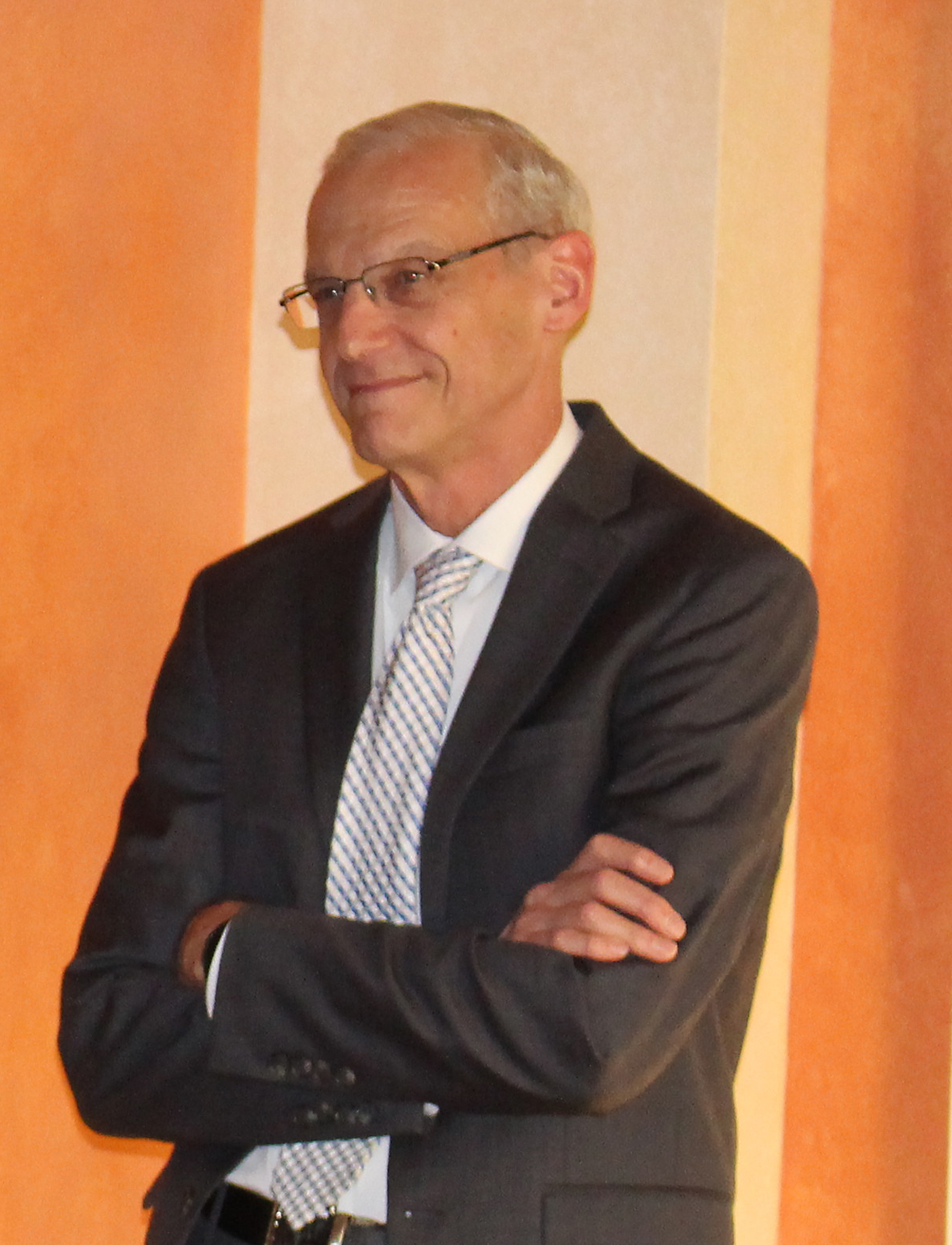
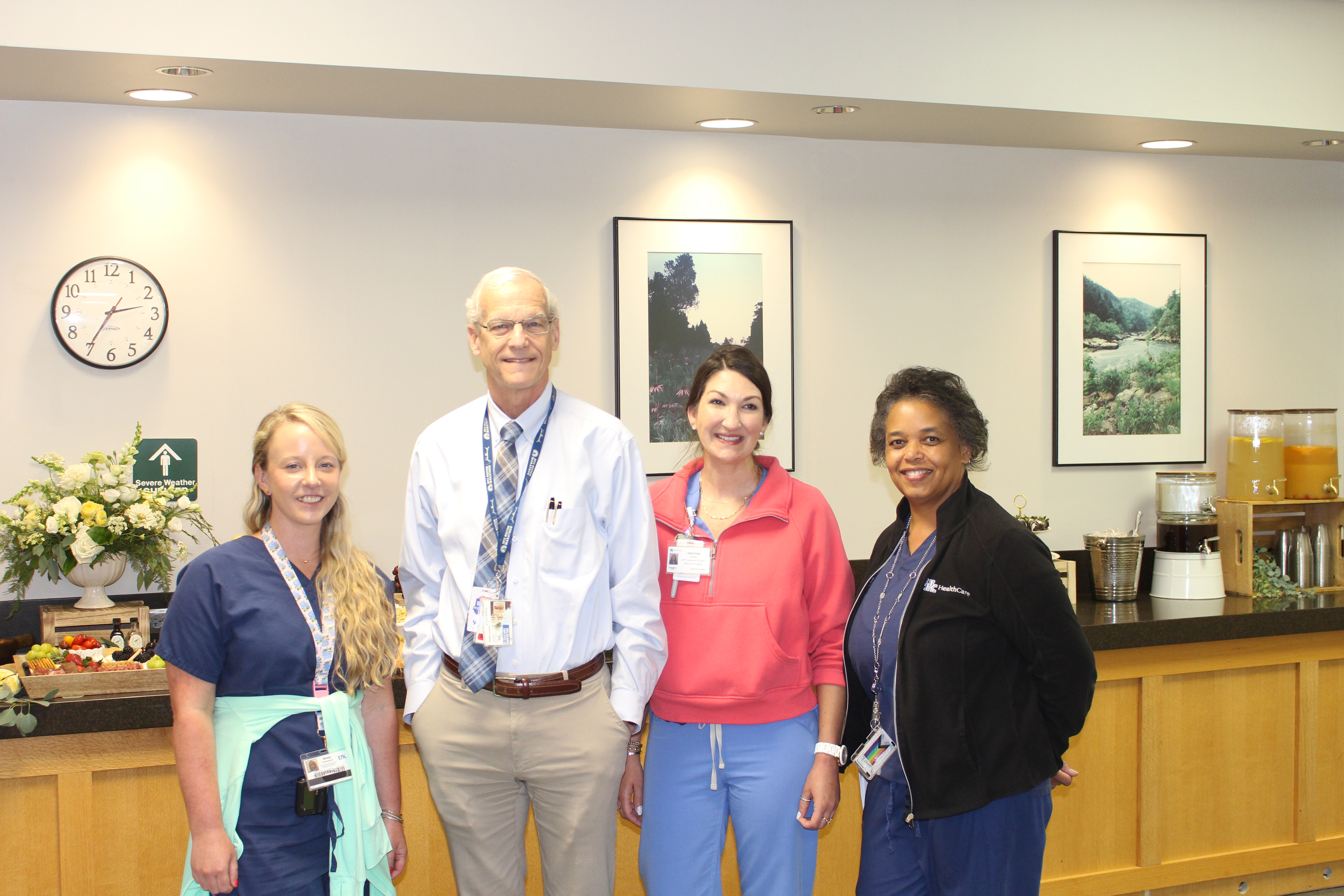
Recruitment decisions are not the exclusive province of NCAA sports programs.
In 1988, Eric "Rick" Endean, M.D., finishing his fellowship in peripheral vascular surgery at Loyola University, faced a very hard choice.
Jack Cronenwett, M.D., a leading researcher in vascular disease and chief of the vascular surgery section at Dartmouth Hitchcock Medical Center, wanted a vascular surgeon to join him in New Hampshire. Endean had worked with him at the University of Michigan. They were friends and he liked the prospect of continuing that relationship. "I had gone on record as saying that if there was one person I'd love to work with, it was Jack Cronenwett," Endean said.
There was, however, another offer on the table from the University of Kentucky.
Byron Young, M.D., had recently taken over from Ward Griffen, M.D. as UK Department of Surgery Chair and several surgeons had chosen to leave UK during the transition in leadership. Bill Strodel, M.D., had recently been recruited as UK's Division Chief of General Surgery and was a Michigan alum like Endean. Strodel took on the job of rebuilding the division. Among the positions that he needed to fill was a faculty position in vascular surgery. Knowing Endean was completing his vascular surgery fellowship, he reached out with an offer.
The offers from UK and Dartmouth were basically the same. The deciding factor, Endean said, was the personality of the UK Department of Surgery faculty. "It was very hard to say 'No' to Jack. Very hard. But that's what I did."
This new generation of surgeons included Richard Schwartz, M.D., Pat McGrath, M.D., Paul Kearney, M.D., David Sloan, M.D., Thomas Schwarcz, M.D., Steve Johnson, M.D. and Don Barker, M.D., among others. They were all about the same age and came with much enthusiasm and energy. They joined the established faculty which included Gordon Hyde, M.D., Dan Kenady, M.D., and Pat Hagihara, M.D..
"It was an exciting time to be part of the surgery department," Endean said. Much of that was due to the energy and vision that Bill Strodel brought to the general surgery division. There has always been an emphasis on providing excellent patient care, but Strodel and Young also pushed for academics and research.
UK provided lab space and technical support. Through that network, Endean secured seed grant funding from the VA and NIH for several projects. There were also new ideas to improve medical education quality in the United States and the UK College of Medicine was among the national leaders of that movement.
"As an assistant professor, I was truly living that triple threat: clinical practice, research, and academics."
Leadership roles
It did not take long for general surgery to regain momentum as a busy clinical division. In the years that followed, Endean demonstrated strong leadership skills. After Young moved from being the Chair of Surgery to head the new Neurosurgery department at UK and Strodel left to lead General Surgery at the University of Texas - San Antonio, Endean was asked to step in as the interim Division Chief of General Surgery as well as taking on the role as Program Director of the General Surgery Residency program.
Though he was told that he was "interim," when Robert Mentzer, M.D., was appointed as the Department Chair, he made Endean's appointments permanent. Over the next couple of years, it became apparent that if Endean were to continue his clinical practice, something had to give. Since he preferred the educational side of surgery over administration, he gladly relinquished division chief duties to his colleague, Pat McGrath. He continued for over a decade thereafter to serve as the residency program director.
The timing was interesting. There were significant changes occurring in surgical resident education and Endean was a part of that conversation. “I grew up in the era where there were no restrictions on duty hours; not for faculty or residents. It was easy to see situations in which the hours being asked of some residents were excessive. It was ridiculous."
On the other hand, expectations on residents to excel are high for good reasons. They are expected to learn everything that’s in the textbook, learn how to independently perform complex operations, understand when to operate and when not to operate, keep up with published articles, actively engage in research, teach medical students, learn to interact and empathize with patients, and become adept with the latest technology in a field that changes constantly. Ensuring that residents finish their training as competent surgeons capable of delivering excellent patient care requires that they put in time and effort.
As a former program director, division chief and, most recently, vice chair for well-being in the Department of Surgery, Endean has long participated in the discussion about what constitutes healthy and effective surgical training. It is an ongoing challenge to find the correct balance between surgical education, administering patient care, and assuring the well-being of patients and residents.
One can recognize when resident training programs are effective and when they cross the line into abuse. “To some extent, you know it when you see it,” he said.
Looking Forward
Nevertheless, Endean considers the surgical training programs at UK as among the nation’s best.
The primary reason is the quality of its faculty. In nearly four decades, he has had the privilege of working alongside countless surgeons through UK and his lengthy association with the Southern Association of Vascular Surgeons (SAVS.) He has enjoyed a long and close friendship with Gordon Hyde, M.D., even to the point of being named the inaugural Gordon Hyde Endowed Professor in Vascular Surgery. His friend and colleague David Minion, M.D., is a worthy successor to the professorship, Endean said.
But it's also the mission of UK HealthCare to provide families in Kentucky and this region with the best possible care. Similar to his experience as a resident in Michigan, UK Chandler Medical Center is a regional referral center. Residents will get important experience treating patients who present with some of the most complex sets of pathologies they will ever see.
“These are conditions the average surgeon will not encounter. It is the reason UK HealthCare is important to this Commonwealth as a leading teaching hospital,” Endean said. For those who value academic medicine, even the faculty continue to be learners.
Vascular surgery was only just becoming an independent surgical specialty when Endean finished his fellowship. At that time, there were essentially no endovascular procedures being done by vascular surgeons. It was all open procedures. “I had to learn endovascular surgery as a faculty member at UK. Now it is an integral part of what we do,” he said.
The Gill Heart and Vascular Institute at UK is always pushing further, investing in technology and moving toward becoming a center of excellence in vascular health. Endean has said that he believes that UK HealthCare has the potential to become one of the premier medical centers in the country, treating the most complex patients. His vision for the future is that UK will be recognized for the outstanding care and innovation that the surgical services provide daily.
"Part of the reason I spent my professional career at UK is my personality. I don't much like change," Endean said. But Endean also feels that he has invested a great deal of himself in the surgery department just as the department and the division have embraced him through his career.
He'll always be grateful for that.